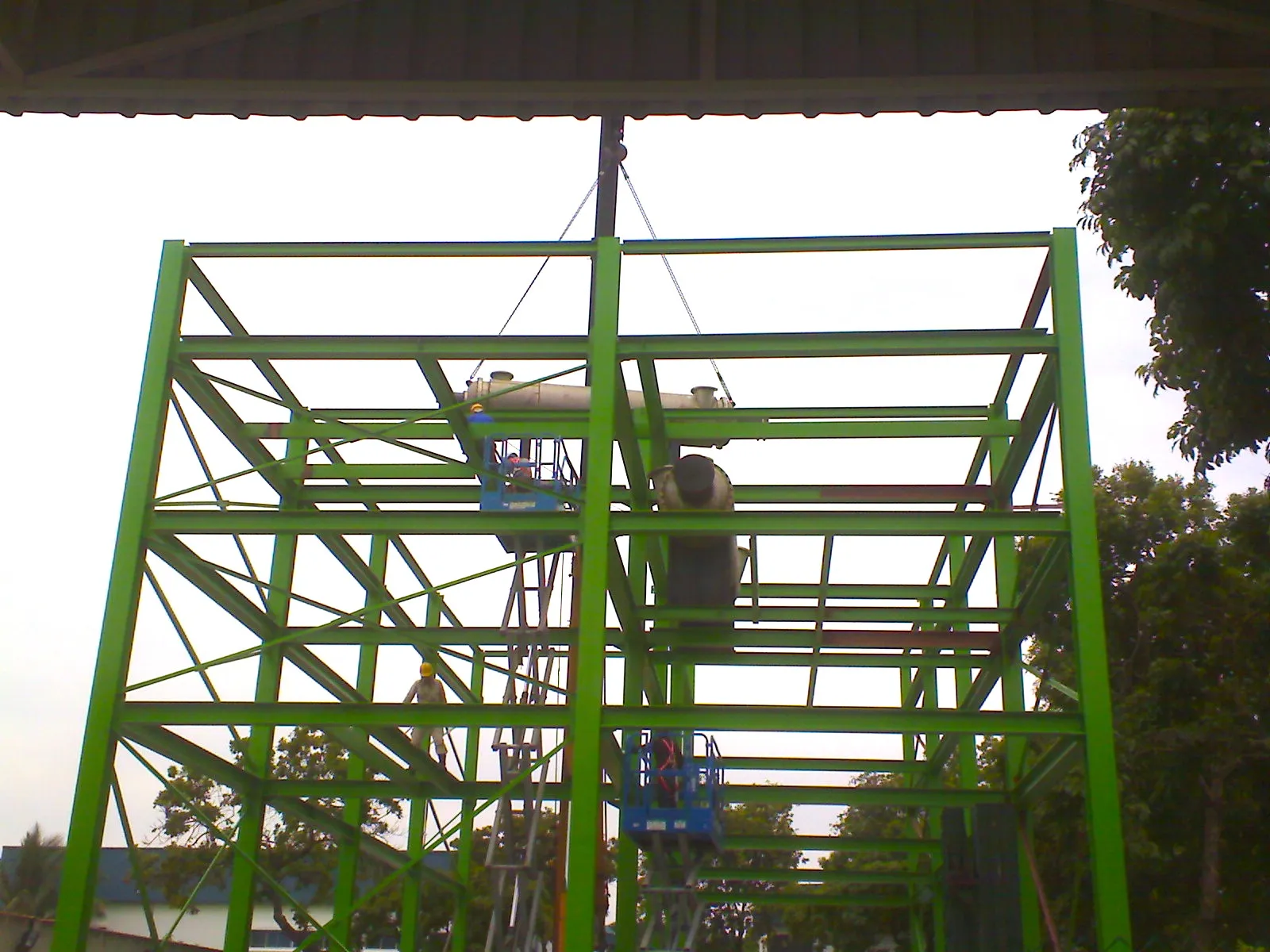
* Industry estimate: majority of low-cost plants from unvetted manufacturers underperform or shut down within 3 years
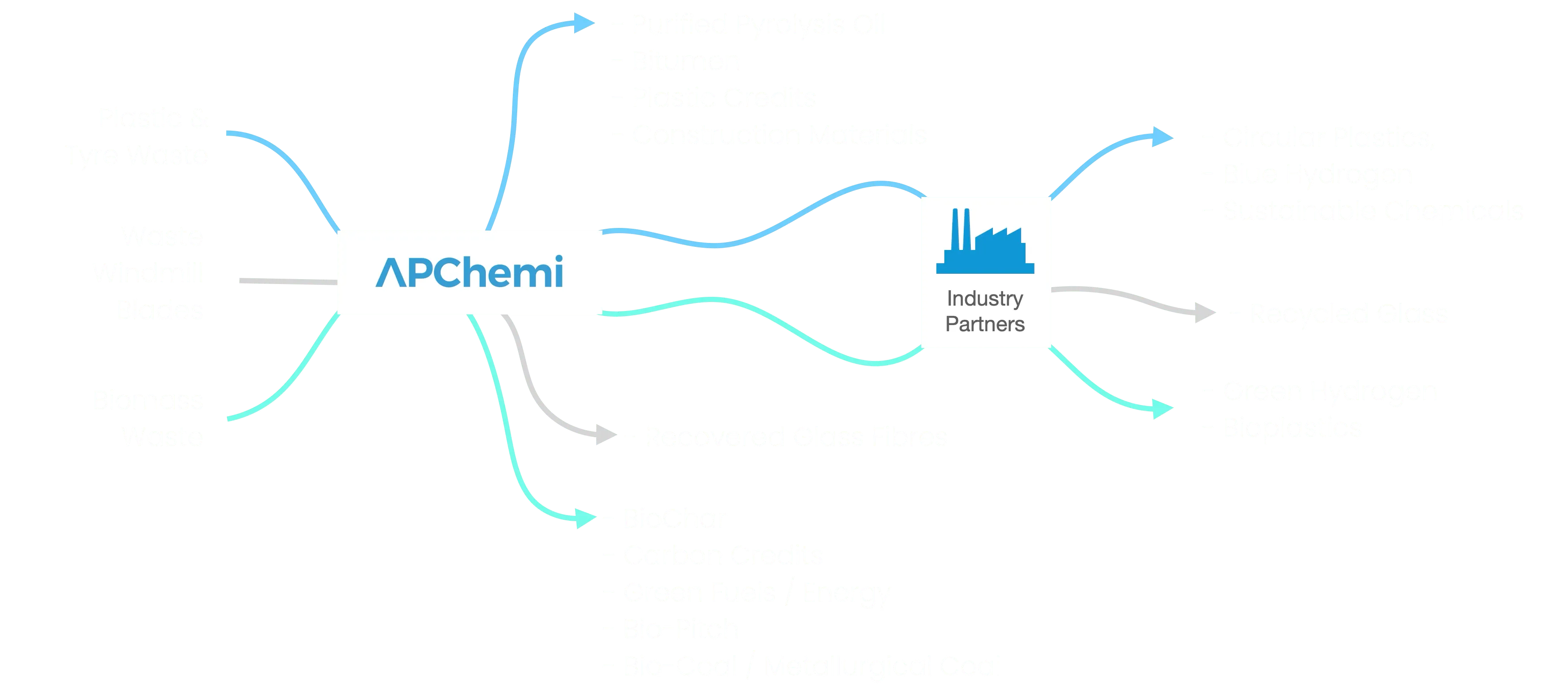
Why Your Manufacturer Choice Matters More Than You Think
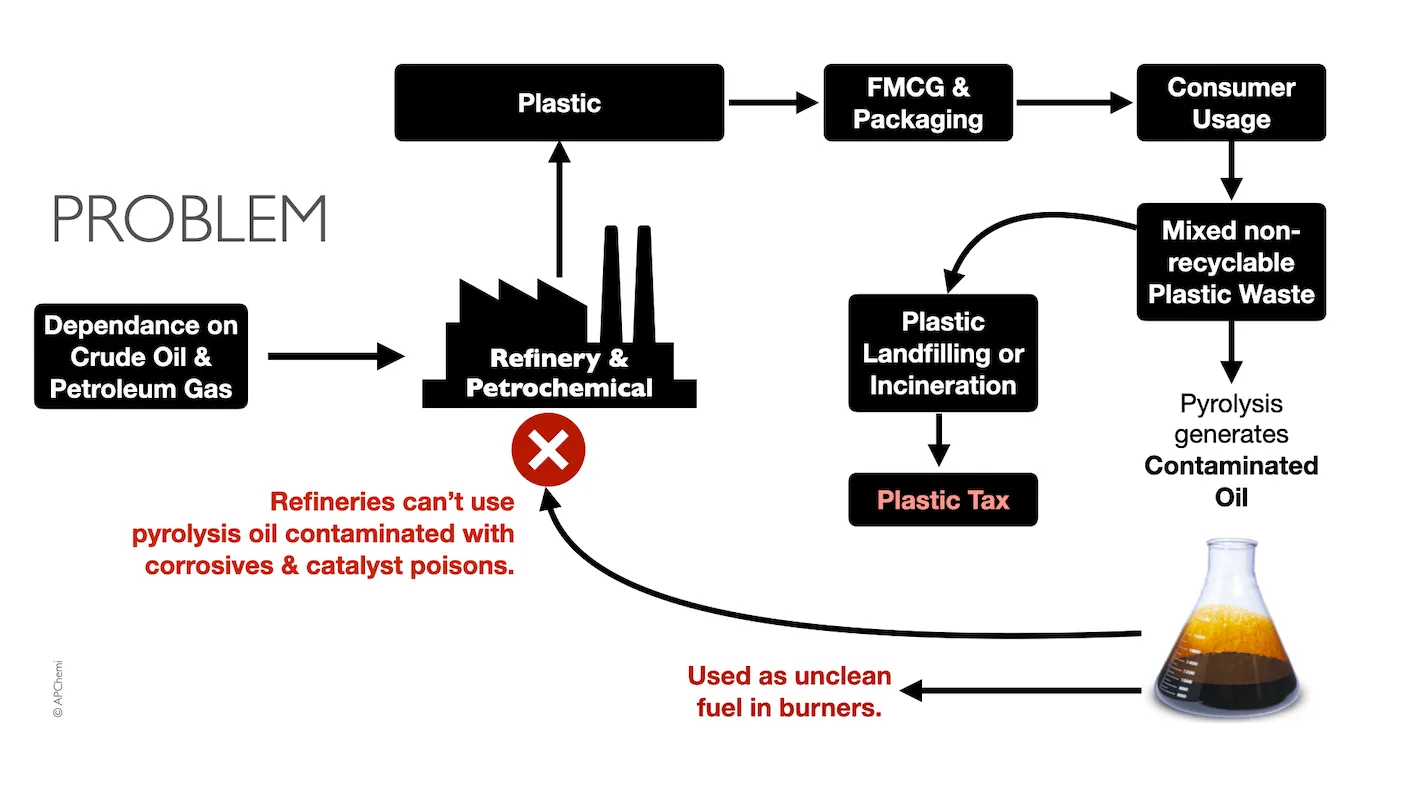
The pyrolysis industry has a dirty secret: the majority of plants built with cheap, unproven equipment fail to meet their projected performance. The consequences are severe:
❌ What Goes Wrong with Poor Manufacturers
- ✗ Oil yields 15-40% below claims — vendor said 80%, plant delivers 50-60%
- ✗ Reactor failures in Year 1 — poor metallurgy, inadequate heat distribution
- ✗ No after-sales support — manufacturer disappears after final payment
- ✗ Emission non-compliance — plant can't meet local regulations, faces shutdown
- ✗ Can't get ISCC certified — plant design doesn't support mass balance requirements
✅ What Proven Manufacturers Deliver
- ✓ Yields match or exceed projections — backed by R&D test data, not guesses
- ✓ Equipment runs 80-92% uptime — designed for continuous commercial operation
- ✓ Full commissioning + training — your team is fully operational before handover
- ✓ Regulatory compliance built-in — emission controls designed for your jurisdiction
- ✓ ISCC-ready from design stage — mass balance, traceability, and QA systems included
How to Evaluate a Pyrolysis Plant Manufacturer
Use this systematic evaluation framework when comparing manufacturers. Weight each category according to your project priorities:
Track Record
- Number of commercial plants delivered (not just sold)
- Years of continuous operation in reference plants
- Diversity of feedstock experience (plastic, tire, biomass)
- Client references you can actually contact
- Published case studies with verifiable data
Technology & IP
- Proprietary patents vs assembled third-party components
- R&D facility and ongoing technology development
- Process yield data from actual operations (not simulations)
- Reactor design maturity and generation count
- Oil purification/distillation capability
Quality & Certifications
- ISO 9001, ISO 14001, CE marking
- ASME/PED compliance for pressure equipment
- ISCC Plus certification capability for output products
- Third-party quality audits and inspection protocols
- Material certificates and component traceability
After-Sales & Support
- Commissioning support and operator training included
- Spare parts availability and lead times
- Remote monitoring and troubleshooting capability
- Warranty terms (equipment, performance, yield guarantees)
- Long-term service and maintenance agreements
Financial Stability
- Company age, revenue, and financial health
- Insurance coverage for project delivery
- Escrow or milestone-based payment terms
- Bank guarantees or performance bonds
- Reference banking and credit checks
Project Execution
- In-house engineering team size and capability
- EPC / turnkey delivery capability
- Project management methodology and tools
- Site supervision and commissioning team
- Timeline adherence track record
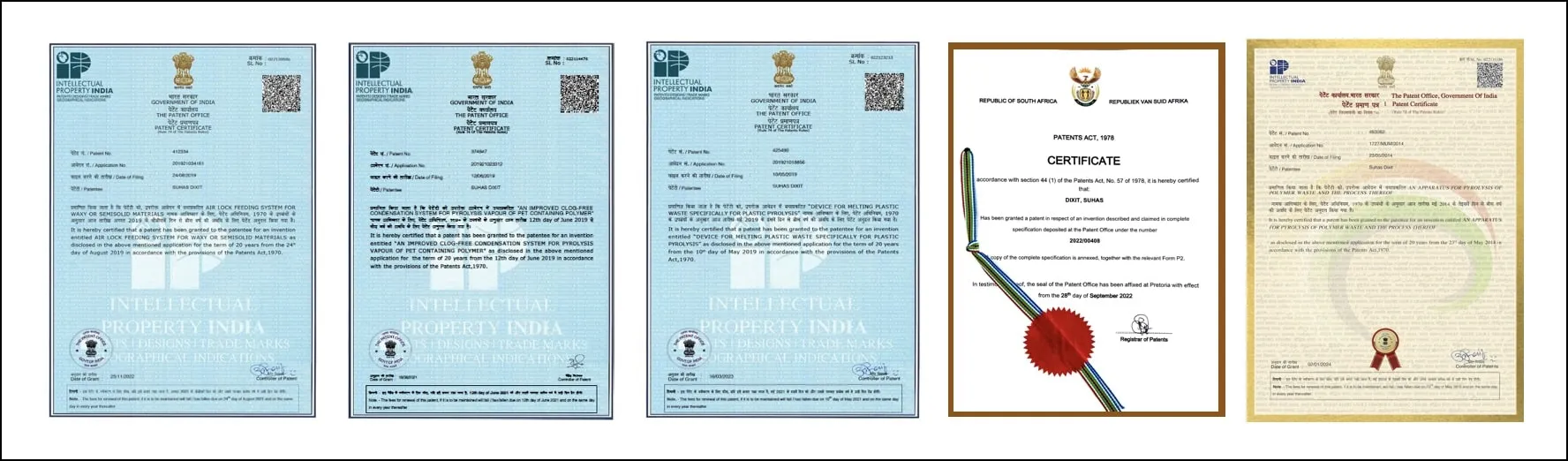
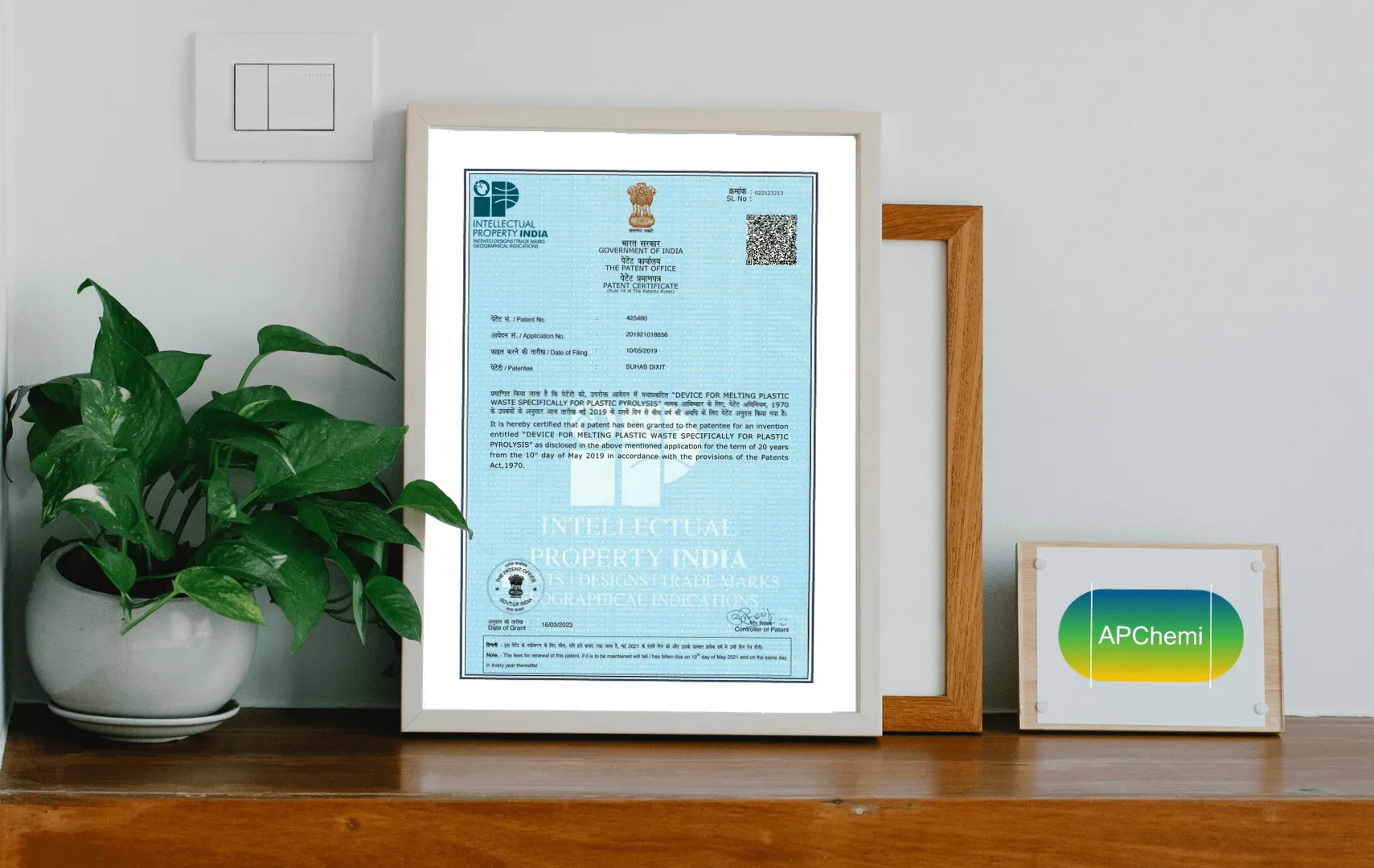
Not sure which manufacturer to choose? APChemi has delivered 49+ pyrolysis plants with 12+ patents and 17+ years of experience. Get a free consultation to discuss your project requirements and find the right solution.
Red Flags — When to Walk Away
The pyrolysis industry attracts companies of widely varying quality. These warning signs should trigger serious caution — or disqualification:
🚩 No verifiable commercial-scale reference plants
If a manufacturer can't connect you with existing clients running their equipment at commercial scale, that's a major risk. Pilot units don't count — ask for site visits to operating commercial plants.
🚩 Oil yield claims exceeding realistic thresholds
Realistic oil yields: waste tires 40-55%, mixed plastics 50-70%, clean PE/PP 60-80%. Claims above these ranges (e.g., >55% for tires, >80% for mixed plastics) should be verified with independent test data from your specific feedstock.
🚩 No patents, proprietary technology, or demonstrable R&D capability
Manufacturers who assemble commodity components add no IP value. Look for patents, an in-house R&D facility, or published research. When problems arise, assemblers have no deep expertise to solve them.
🚩 Payment 100% upfront
Legitimate manufacturers work with milestone-based payments (30-40-20-10 or similar). Full upfront payment offers zero leverage.
🚩 No written performance guarantee with specific, measurable metrics
A confident manufacturer provides written guarantees for throughput capacity, minimum yield, uptime, and emission compliance — with liquidated damages for non-performance. Vague verbal promises are worthless.
🚩 "Cheapest price" as main selling point
If the pitch is purely about lowest cost, the manufacturer is competing on price because they can't compete on quality or capability.
🚩 No after-sales team or spare parts plan
Equipment will need maintenance and parts. A manufacturer without a spare parts supply chain will leave you stranded.
🚩 Resistance to third-party inspection
Professional manufacturers welcome quality inspections during manufacturing. Resistance suggests quality issues.
🚩 Poor or minimal documentation
No detailed P&ID, equipment datasheets, or operating manuals provided during the sales process. Quality manufacturers have comprehensive documentation ready — it reflects their engineering rigor.
🚩 No HAZOP or safety documentation
Pyrolysis involves flammable gases, high temperatures, and pressure. A manufacturer with no HAZOP study, safety case, or risk assessment is cutting corners on the most critical aspect of plant design.
🚩 Claims direct diesel output without distillation
Pyrolysis oil is NOT diesel. Any manufacturer claiming their reactor directly produces Euro-standard diesel or petrol without a separate distillation/refining step is either ignorant or dishonest. This is a fundamental chemistry fact.
🚩 Low-quality materials and poor fabrication
Thin reactor walls, mild steel where stainless or alloy is needed, poor welds, and cheap instrumentation. Ask for material certificates, weld inspection reports, and component specifications — these reveal true quality.
🚩 No feedstock-specific testing or pilot data
Every feedstock behaves differently in pyrolysis. A manufacturer who quotes yields without testing YOUR specific feedstock is guessing. Insist on lab or pilot testing before committing.
🚩 No emission control system or vague claims
Pyrolysis produces gases that need treatment before release. A manufacturer without a detailed emission control design (scrubbers, condensers, thermal oxidizers) will leave you with compliance problems.
🚩 Company less than 3 years old with no track record
New companies may have good intentions but lack the operational experience to deliver reliable plants. Verify company history, previous projects, and the team's actual pyrolysis experience (not just corporate age).
🚩 No energy or mass balance provided
An energy/mass balance is fundamental engineering. It shows where feedstock mass goes (oil, char, gas, losses) and whether the plant is energy self-sufficient. No balance = no engineering rigour.
🚩 Batch-only systems marketed for regulated markets
Batch pyrolysis plants struggle to meet continuous emission monitoring requirements in EU, UK, and North American markets. If you need ISCC or operate in regulated jurisdictions, batch systems may not be suitable.
🚩 No offtake guidance or unrealistic product value claims
A responsible manufacturer helps you understand realistic market prices for pyrolysis oil, char, and gas in your region. Claims of $800+/tonne for raw pyrolysis oil or guaranteed offtakers without contracts are red flags.
🚩 No PFD or P&ID provided during sales process
Process Flow Diagrams and Piping & Instrumentation Diagrams are basic engineering deliverables. A manufacturer who can't provide these during the proposal stage likely doesn't have a properly engineered design.
🚩 Reseller or trader posing as manufacturer
Many 'manufacturers' on Alibaba and trade shows are actually traders or agents who source from multiple factories. They have no engineering team, no quality control, and no accountability. Verify factory ownership.
🚩 No certifications relevant to your target market
CE marking for EU, ASME for US pressure vessels, ATEX for explosive atmospheres. A manufacturer selling into a market without the relevant certifications is either ignorant of requirements or cutting costs.
🚩 Unproven scale-up from pilot to commercial
A 1 TPD pilot running successfully does NOT prove a 50 TPD commercial plant will work. Scale-up introduces heat transfer, material handling, and structural challenges. Demand evidence of commercial-scale operation.
Claimed vs Actual Oil Yield — The Industry's Biggest Lie
The single most common deception in pyrolysis equipment sales is inflated oil yield claims. Manufacturers routinely quote yields 10-20% higher than what real-world operations deliver. This table shows the gap between marketing claims and reality, based on academic literature and commercial plant data:
Claimed vs Realistic Oil Yields by Feedstock
Based on academic literature and commercial operating data
| Feedstock | Realistic Yield | Manufacturer Claims | Gap |
|---|---|---|---|
| Waste Tires | 40-55% | "Up to 60-65%" | 5-10% overstatement |
| PE/PP (clean) | 60-80% | "Up to 85-95%" | 5-15% overstatement |
| Mixed Polyolefins | 50-70% | Rarely specified | Often conflated with clean PE/PP |
| PET | ~23% (corrosive) | Grouped into "plastics" | Misleading by omission |
| PVC | Not suitable | Sometimes not excluded | Dangerously misleading |
| Biomass / MSW | 43-60% | "Up to 75%" | 5-15% overstatement |
Key takeaway: If a manufacturer quotes yields at the top end or above the "Realistic" column without feedstock-specific test data, treat the claim with extreme scepticism. Always demand lab or pilot test results from YOUR specific feedstock.
$500M+ in Documented Industry Failures
The pyrolysis industry has seen catastrophic financial losses from projects that relied on unproven technology, unvetted manufacturers, or unrealistic projections. These anonymised case studies illustrate the scale of risk:
Source: Thunder Said Energy industry tracking data; public filings and bankruptcy records
US Advanced Recycling Facility
Operated at just 5% of nameplate capacity, suffered 6-7 fires, filed for bankruptcy. Assets sold for $14.3M — a 95% loss.
Lesson: Unproven technology at commercial scale
Malaysia Tire Pyrolysis Complex
Pilot-scale technology failed when scaled to 120 TPD commercial operation. Plant never reached design capacity.
Lesson: Pilot success ≠ commercial viability
US Recovered Carbon Black Plant
Chapter 7 liquidation with $49.4M in liabilities. Product quality could not meet market specifications.
Lesson: Validate product quality and market fit before investing
UK Chemical Recycling Pioneer
After 11 years of R&D, the machine was valued at just £176K. Never achieved sustained commercial operation.
Lesson: Long R&D history ≠ commercial readiness
US Plastic-to-Fuel Startup
Investigation revealed plastic feedstock was reportedly being sent directly to cement kilns rather than being pyrolysed as claimed.
Lesson: Verify actual operations, not just claims
Manufacturers by Region
The pyrolysis plant manufacturing landscape varies dramatically by region. Here's an honest comparison of what each region offers:
China
Equipment: $20K - $500KStrengths
- ✓ Lowest equipment prices (30-50% cheaper)
- ✓ Huge manufacturing capacity
- ✓ Wide range of plant sizes available
- ✓ Short manufacturing lead times
Weaknesses
- ✗ Variable quality — wide range from poor to decent
- ✗ Limited after-sales support outside China
- ✗ IP concerns and technology copying
- ✗ Communication and language barriers
- ✗ Spare parts logistics can be slow
Best for: Budget-constrained pilot projects where the operator has in-house engineering capability
India
Equipment: $30K - $3M+Strengths
- ✓ Competitive pricing with strong engineering
- ✓ Growing R&D and patent portfolio
- ✓ English-speaking technical teams
- ✓ Strong in process engineering and design
- ✓ APChemi: 49+ projects, 12+ patents, ISCC expertise
Weaknesses
- ✗ Fewer manufacturers than China
- ✗ Some lack international project experience
- ✗ Verify certifications carefully
Best for: Mid-to-large scale projects needing proven technology, R&D-backed design, and ISCC certification at competitive cost
Europe
Equipment: $200K - $10M+Strengths
- ✓ Highest quality and regulatory compliance
- ✓ CE marking and ISCC infrastructure built-in
- ✓ Strongest IP protection and patents
- ✓ Premium after-sales and remote monitoring
- ✓ Best for ISCC/circular economy markets
Weaknesses
- ✗ 20-40% cost premium over Asian manufacturers
- ✗ Longer lead times (6-12 months)
- ✗ Limited capacity for large order volumes
Best for: ISCC-certified commercial plants in regulated markets (EU, UK, North America) where quality and compliance are paramount
North America
Equipment: $250K - $5M+Strengths
- ✓ Local presence and support
- ✓ IRA tax credit eligibility
- ✓ US regulatory compliance built-in
- ✓ Growing number of technology providers
Weaknesses
- ✗ Limited number of specialized manufacturers
- ✗ Highest cost per unit of capacity
- ✗ Most are technology licensors, not manufacturers
Best for: US-based projects seeking IRA incentives and requiring domestic content requirements
19 Questions to Ask Every Manufacturer
Before signing a contract, get clear answers to these questions across three critical categories. A manufacturer that can't answer them confidently is a manufacturer you should avoid:
Technical Due Diligence (7 Questions)
"How many commercial-scale plants are currently operating with your equipment?"
Accept only plants you can verify. 'Installed' ≠ 'operating successfully.'
"Can I visit a reference plant and speak directly with the operator?"
If they can't arrange this, question why. Insist on independent contact.
"What are the guaranteed yield specifications for MY specific feedstock?"
Get it in writing with test data. Generic yield claims are meaningless.
"Have you tested my feedstock in your R&D facility? Can I see the report?"
Lab-tested yields are far more reliable than theoretical or literature values.
"Can you provide a complete energy and mass balance for this design?"
This is basic engineering. No balance means no engineering rigour.
"What reactor metallurgy and materials of construction are specified?"
Ask for material certificates. Cheap materials = short reactor life.
"What emission levels will the plant achieve? Can you provide a HAZOP study?"
Get specific numbers, standards, and safety documentation — not vague promises.
Commercial Due Diligence (6 Questions)
"What patents do you hold related to pyrolysis technology?"
Patents indicate genuine R&D investment and unique capability.
"What's the spare parts availability and lead time?"
A broken reactor with 6-month spare parts lead time = financial disaster.
"Can your plants achieve ISCC Plus certification?"
Critical for accessing premium circular economy markets and green financing.
"What are the payment terms and milestone schedule?"
30-40-20-10 milestone structure is standard. Never pay 100% upfront.
"What does the warranty cover, and for how long?"
Get specifics: equipment warranty, performance warranty, what's excluded.
"What is the total installed cost including civil, electrical, and commissioning?"
Equipment cost ≠ total project cost. Budget 1.5-2.5x equipment cost for turnkey.
Legal Due Diligence (6 Questions)
"Will you provide written performance guarantees with liquidated damages?"
A manufacturer confident in their technology will accept performance risk.
"What insurance coverage do you carry for project delivery?"
Professional indemnity and product liability insurance are essential.
"Who owns the IP if you design a custom solution for my project?"
Clarify IP ownership upfront to avoid disputes later.
"What certifications does your equipment carry for my target market?"
CE, ASME, ATEX, PED — verify they match your jurisdiction's requirements.
"Can you provide audited financial statements or bank references?"
A manufacturer that goes bankrupt mid-project leaves you with expensive scrap.
"What are the liquidated damages for delays and non-performance?"
Specific LD clauses create accountability. Vague 'best effort' clauses don't.
Need help evaluating a pyrolysis plant manufacturer? APChemi's engineers can review proposals, conduct factory audits, and provide independent technical assessment. 49+ plants delivered with 12+ patents. Get a free consultation.
Why APChemi — 49+ Plants, 12+ Patents, 17+ Years
APChemi's plants are engineered to be 7x better — delivering measurable advantages across energy efficiency, safety, raw material flexibility, cost efficiency, anti-coking technology, scalability, and oil purity. Few manufacturers can match this combination:
49+ Commercial Plants
Not prototypes or pilot units — real commercial plants processing waste daily across multiple countries. APChemi has processed 227M+ kg of feedstock through its designs.
Own R&D Facility
In-house laboratory and pilot plant for testing any feedstock. Yield claims are backed by actual test data — not literature values or theoretical models.
12+ Patents
Proprietary patent-protected technology including the PYROMAX reactor and PUREMAX oil purification system. APChemi innovates — not copies.
Oil Distillation Plant
APChemi owns and operates a fractional distillation plant for pyrolysis oil — unique expertise in oil purification and product upgrading that no other manufacturer offers.
ISCC Plus Experts
4 plants guided through ISCC PLUS certification (+1 coming up) — opening premium markets for recycled content. APChemi designs plants with certification requirements built in from day one.
End-to-End Service
Feasibility → R&D testing → design → procurement → construction management → commissioning → operations support. Single point of responsibility for your project.
Powered by APChemi — The Manufacturer with Proof
Search Our Directory
Find and compare pyrolysis plant manufacturers from across the globe in our comprehensive directory.
Frequently Asked Questions
Chinese manufacturers offer the lowest upfront cost (30-50% cheaper) but with variable quality, limited after-sales support, and potential IP concerns. European manufacturers cost more (20-40% premium) but deliver higher quality, ISCC/CE compliance, stronger patents, and better long-term support. Indian manufacturers like APChemi offer a middle ground — competitive pricing with strong engineering capability. The right choice depends on your scale, certification needs, and risk tolerance.
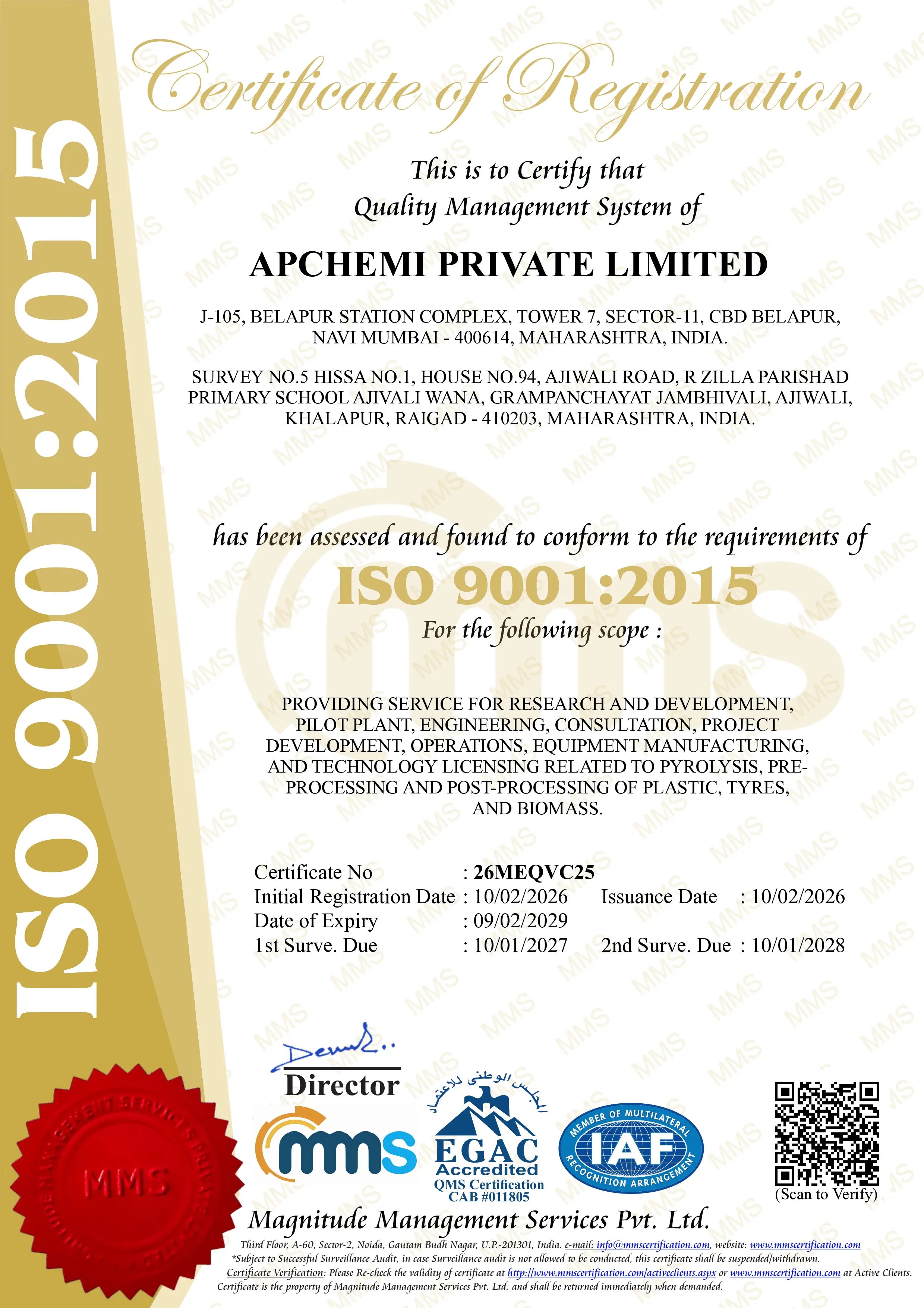
Look for ISO 9001 (quality management), ISO 14001 (environmental management), CE marking (for EU sales), ASME/PED compliance (pressure equipment), and critically — whether their plants can achieve ISCC Plus certification (required for circular economy markets). Also check for patents: manufacturers with proprietary technology have more skin in the game. APChemi holds 12+ patents and has guided 4 plants through ISCC PLUS certification (+1 coming up).
Turnkey (single EPC provider) is recommended for most projects. It provides a single point of accountability, integrated design, tested systems, and clear warranty terms. Multi-sourcing is cheaper on paper but creates interface risks, finger-pointing during commissioning, and no single party responsible for plant performance. APChemi provides full turnkey solutions including design, procurement, construction supervision, and commissioning.
APChemi has designed and delivered 49+ pyrolysis and thermochemical plants worldwide across 17+ years. This includes biomass pyrolysis (biochar/CDR), tire pyrolysis, plastic pyrolysis, and gasification plants. APChemi also owns and operates a pyrolysis oil fractional distillation plant and an R&D facility for feedstock testing. The company holds 12+ patents and has guided 4 plants through ISCC PLUS certification (+1 coming up).
Equipment manufacturing typically takes 4-8 months depending on capacity and complexity. Full turnkey project timelines (design → manufacturing → civil works → installation → commissioning) range from 8-18 months. Smaller batch plants can be delivered in 4-6 months. Budget an additional 2-6 months for permitting and site preparation. APChemi provides detailed project schedules during the proposal phase.
Importing is common and often necessary — there are few pyrolysis plant manufacturers in most countries. Key considerations: import duties (0-15% depending on country), shipping costs ($15K-$80K for containerized equipment), local installation requirements, and after-sales support logistics. Many clients import equipment from India/Europe and use local contractors for civil and electrical works under the manufacturer's supervision.
There are an estimated 300-500+ pyrolysis equipment manufacturers worldwide, with over 13,900 listings on Alibaba alone. However, the vast majority are small assemblers or traders — not genuine technology developers. Fewer than 50 companies globally have demonstrable R&D capability, patented technology, and a track record of successful commercial-scale installations. The wide quality gap makes due diligence critical.
The biggest risk is investing in unproven technology from an unvetted manufacturer. Industry data shows $500M+ in documented losses from failed pyrolysis projects, and 65% of tracked pyrolysis companies underperformed expectations. The most common failure mode: manufacturers claim yields 15-40% higher than what the plant actually delivers, destroying the business case. Always verify yields with independent test data from your specific feedstock.
Exercise extreme caution. While Alibaba has 13,900+ pyrolysis equipment listings, most sellers are traders or agents — not manufacturers with engineering teams. Many listings show identical equipment under different brand names. If you find a promising supplier on Alibaba: verify factory ownership (not just a showroom), request a factory audit, check for patents and certifications, ask for verifiable reference plants, and apply the full 22-point red flag checklist from this page before committing any money.
Get a Free Consultation
Tell us about your pyrolysis project and our engineers will get back to you within 24 hours.
Get a Free Project Assessment →Explore More
Pyrolysis Plant Cost
Detailed pricing by capacity, type, and region.
Pyrolysis Plant Design
How plant design affects performance and ROI.
R&D / Lab Testing
Test your feedstock before committing to a manufacturer.
ISCC Certification
Ensure your manufacturer can deliver ISCC-ready plants.
Case Studies
See APChemi's 49+ delivered plant projects.
Contact APChemi
Discuss your project requirements with our engineering team.