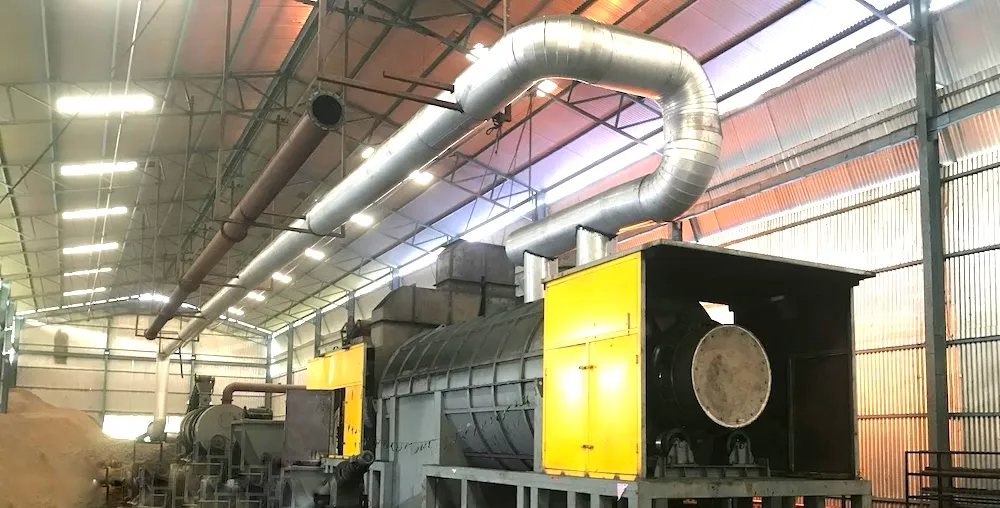
Why Leading Operators Choose Continuous
How Continuous Pyrolysis Works
In a continuous pyrolysis system, the entire process operates in steady state — the reactor never needs to heat from cold or cool for unloading. APChemi's PYROMAX reactor technology is purpose-built for continuous operation, eliminating the 30-40% energy waste seen in batch systems.
Continuous Feeding
Pre-processed feedstock is metered into the reactor via sealed screw feeders or piston systems at a controlled rate, ensuring consistent throughput.
Steady-State Reaction
The reactor maintains a constant 400-600°C. Fresh feedstock enters one end while solid residue exits the other — no heating or cooling interruptions.
Product Recovery
Vapors flow continuously to condensers for oil collection. Solid char is discharged via cooling screws. Gas is recycled as supplementary fuel.
Heat Recovery
Hot exhaust gases and discharged char preheat incoming feedstock, dramatically improving thermal efficiency to 85-90%.
Energy Efficiency Advantage
Batch plants waste 30-40% of energy on repeated heating and cooling cycles. Continuous plants maintain operating temperature 24/7, achieving 85-90% thermal efficiency — translating directly to lower fuel costs and higher margins.
Reactor Types for Continuous Pyrolysis
The choice of reactor technology depends on feedstock type, target capacity, and desired product mix. Each reactor type has specific advantages:
Rotary Kiln
Large rotating cylinder (1-3m diameter, 5-15m long) — the workhorse of commercial pyrolysis.
- ✓ Handles varied particle sizes
- ✓ 10-100+ TPD capacity
- ✓ Best for tires & mixed waste
- ✓ Proven at commercial scale
Screw / Auger
Helical screws push feedstock through a heated tube with precise residence time control.
- ✓ Precise temperature control
- ✓ 5-30 TPD capacity
- ✓ Best for biomass & biochar
- ✓ Compact footprint
Fluidized Bed
Feedstock particles suspended in a stream of hot inert gas or sand for ultrafast heating.
- ✓ Excellent heat transfer
- ✓ Maximum bio-oil yield
- ✓ Best for fast pyrolysis
- ✓ Requires fine feedstock (<5mm)
APChemi's Patented Reactor Technologies
APChemi has developed and patented multiple reactor innovations that solve common problems in continuous pyrolysis:
- Anti-coking system: Prevents carbon buildup inside the reactor, extending run times between maintenance shutdowns
- Airlock feeding: Patented sealed feeding system that prevents oxygen ingress — a critical safety feature for continuous operation
- Automated char discharge: Continuous carbon discharge system eliminates manual handling and maintains reactor efficiency
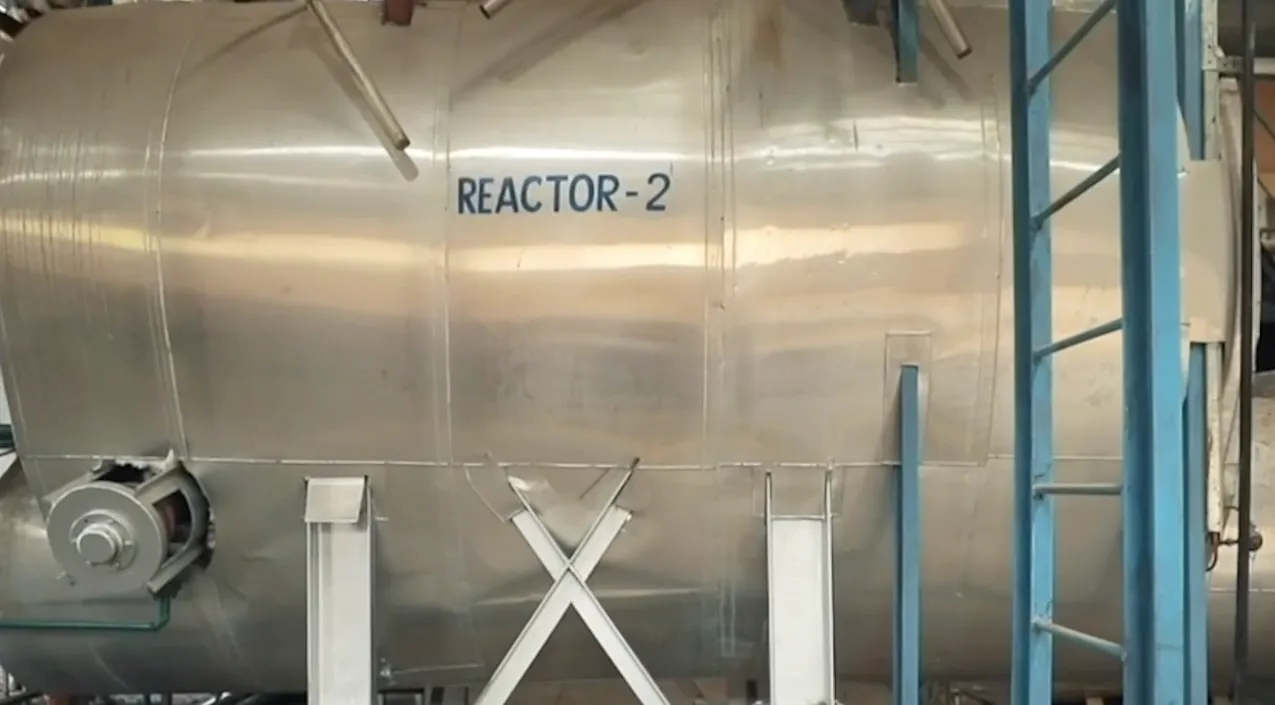
APChemi's anti-coking reactor technology
Sealed Feeding System — Patented Technology
One of the most critical challenges in continuous pyrolysis is maintaining an oxygen-free environment while continuously feeding material. APChemi's patented airlock feeding system solves this with:
- • Double-gate airlock mechanism preventing oxygen ingress
- • Continuous operation without feed interruptions
- • Integrated safety interlocks for emergency shutdown
- • Designed for tires, plastics, and biomass feedstocks

APChemi's patented airlock feeding system
Considering a continuous pyrolysis plant? APChemi's engineers will help you select the right reactor technology for your feedstock and capacity requirements.
Batch vs. Continuous: Full Comparison
Continuous wins on 9 out of 10 factors. Batch only has the advantage on initial capital cost — but this is offset by higher operating costs within 2-3 years.
| Factor | Batch | Continuous | Winner |
|---|---|---|---|
| Capital Cost (10 TPD) | $60,000–$200,000 | $300,000–$1,500,000 | Batch |
| Operating Cost per Tonne | $60–$90 | $30–$60 | Continuous |
| Labor per Shift | 10–20 workers | 4–8 workers | Continuous |
| Energy Efficiency | Lower (heat-cool cycles) | Higher (continuous heat recovery) | Continuous |
| Product Consistency | Variable between batches | Highly consistent | Continuous |
| Annual Throughput | 250–300 days/year effective | 330–350 days/year effective | Continuous |
| ISCC Certification | Difficult to certify | Easier — consistent process | Continuous |
| Maintenance Frequency | After every batch cycle | Scheduled every 2–4 months | Continuous |
| Scale-Up Flexibility | Add more reactors | Increase reactor size or add lines | Continuous |
| Payback Period | 3–5 years | 2–3.5 years | Continuous |
Automation & Control
Modern continuous plants operate with advanced SCADA systems and PLC automation, enabling:
- • Real-time temperature and pressure monitoring across all zones
- • Automated feed rate adjustment based on reactor conditions
- • Remote monitoring and alarm management
- • Data logging for ISCC compliance documentation
This level of automation is what enables continuous plants to operate with just 4-8 workers per shift compared to 10-20 for batch.
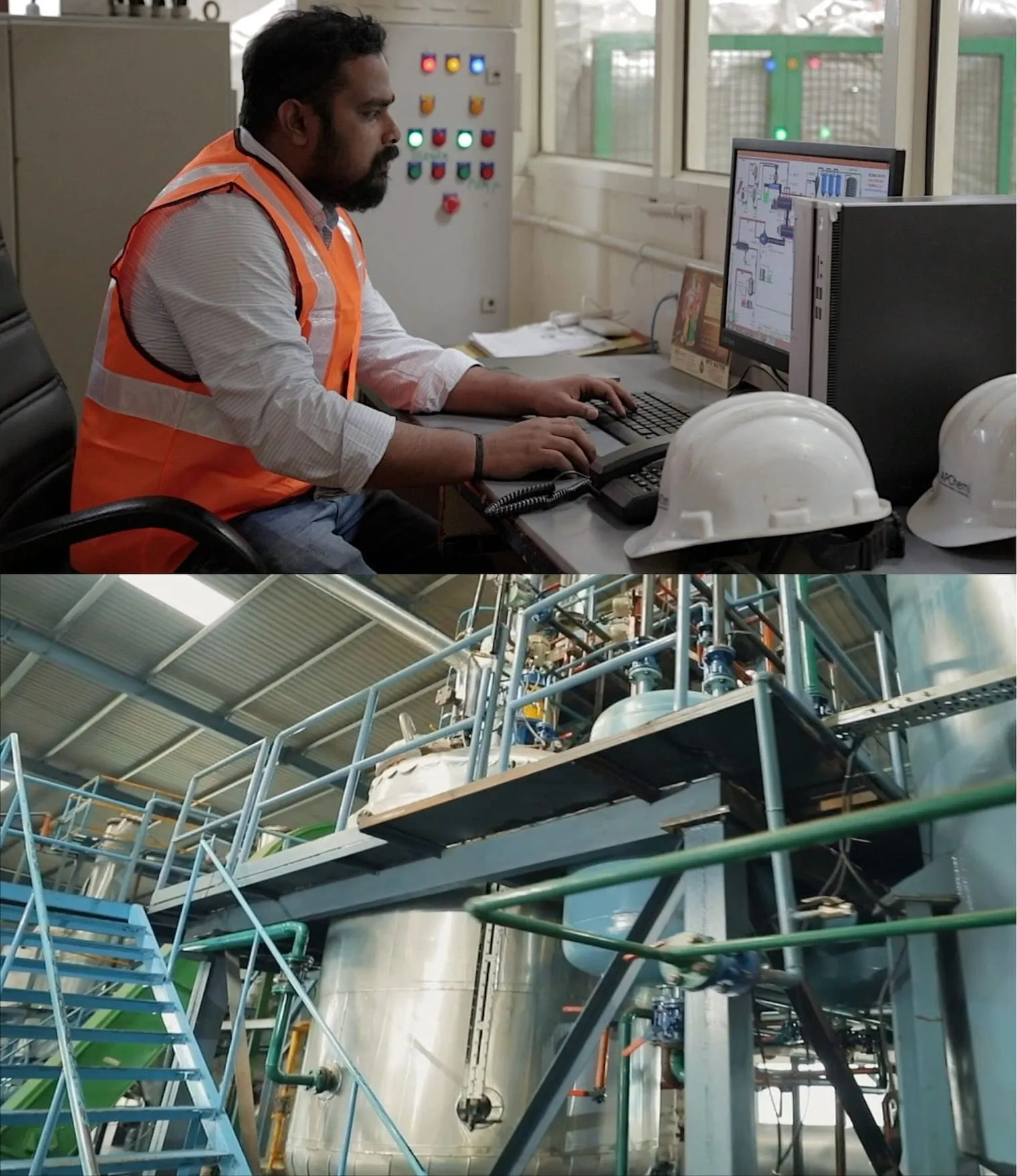
Automated control room for continuous operation
When to Choose Continuous
Capacity Above 10 TPD
The OPEX savings of continuous operation justify the higher CAPEX at capacities above 10 tonnes per day.
ISCC Certification Required
Continuous operation is practically necessary for certifiable, consistent output that meets ISCC mass balance requirements.
Premium Markets Targeted
Petrochemical feedstock, ISCC-certified oil, and high-grade rCB all require the consistent quality only continuous delivers.
Labor is Expensive
In Europe, North America, and Japan/Korea, the 60-80% labor reduction is often the single biggest cost driver.
Long-Term Operation
Lower OPEX and longer equipment life provide better lifetime economics over 10-20 year horizons.
Environmental Compliance
Continuous plants have more stable emissions, making it easier to meet environmental regulations and obtain permits.
Cost Overview
Payback Period: 2–3.5 Years
Continuous plants typically achieve payback in 2-3.5 years vs. 3-5 years for batch at equivalent capacity. The lower per-tonne OPEX and higher throughput combine for significantly better economics over the plant lifetime. See the complete cost guide for detailed ROI analysis.
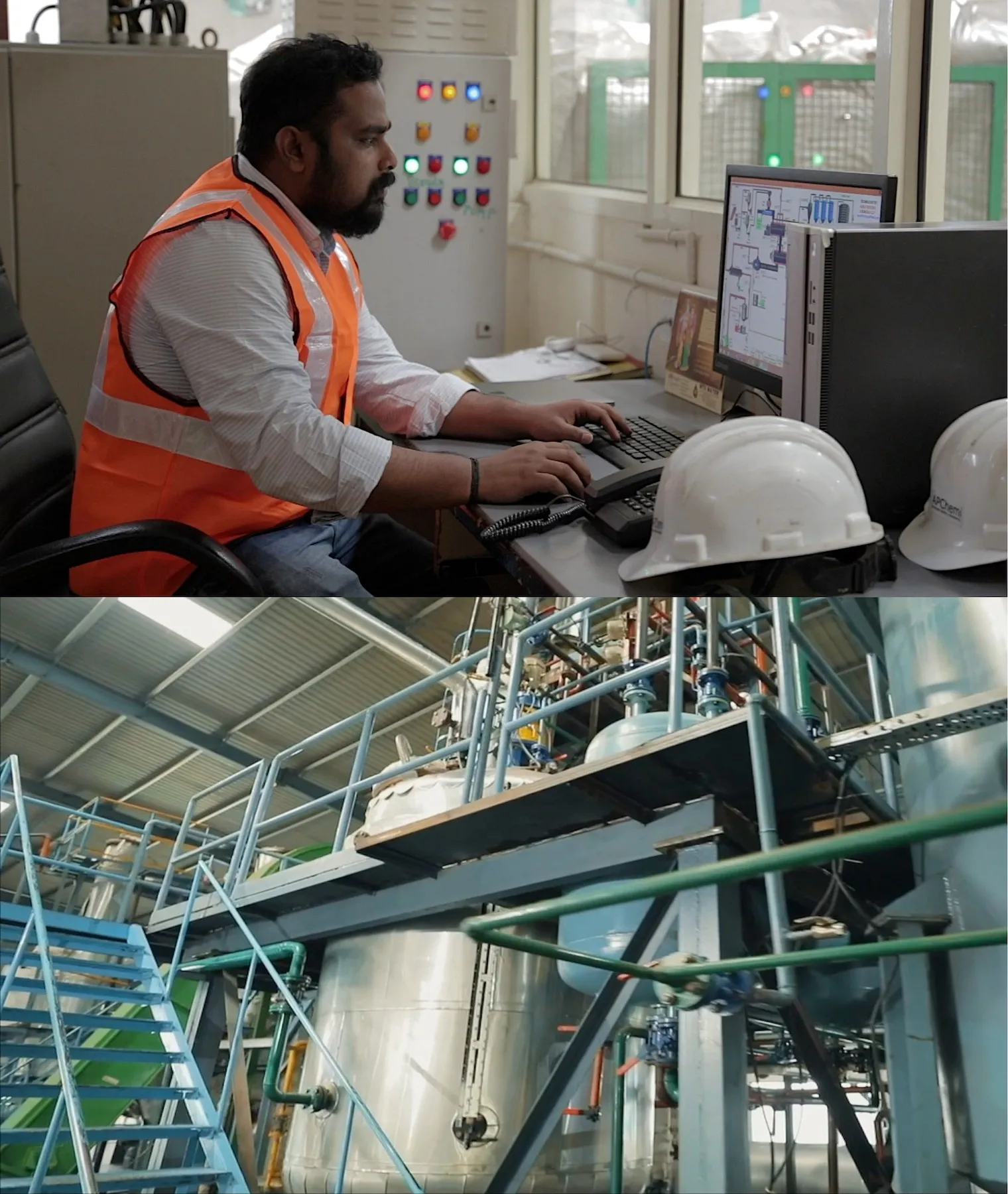
Continuous plant operations — designed for 8,000+ hours/year uptime
APChemi's Continuous Plant Expertise
17+ years delivering continuous pyrolysis excellence with patented PYROMAX reactor technology — across energy efficiency, safety, flexibility, cost, anti-coking, scalability, and oil purity
Plant Design & PMC
- ✓ End-to-end continuous plant design
- ✓ Reactor selection & specification
- ✓ Project management consultancy
- ✓ Commissioning & startup support
R&D & Lab Testing
- ✓ Feedstock characterization
- ✓ Pilot-scale continuous testing
- ✓ Product quality analysis
- ✓ Process optimization trials
Oil Purification
- ✓ PUREMAX purification technology
- ✓ 15,000 L/day distillation capacity
- ✓ Toll processing services
- ✓ Purification plant design
Plant Troubleshooting
- ✓ Continuous plant optimization
- ✓ Yield improvement programs
- ✓ Emissions reduction
- ✓ Uptime optimization
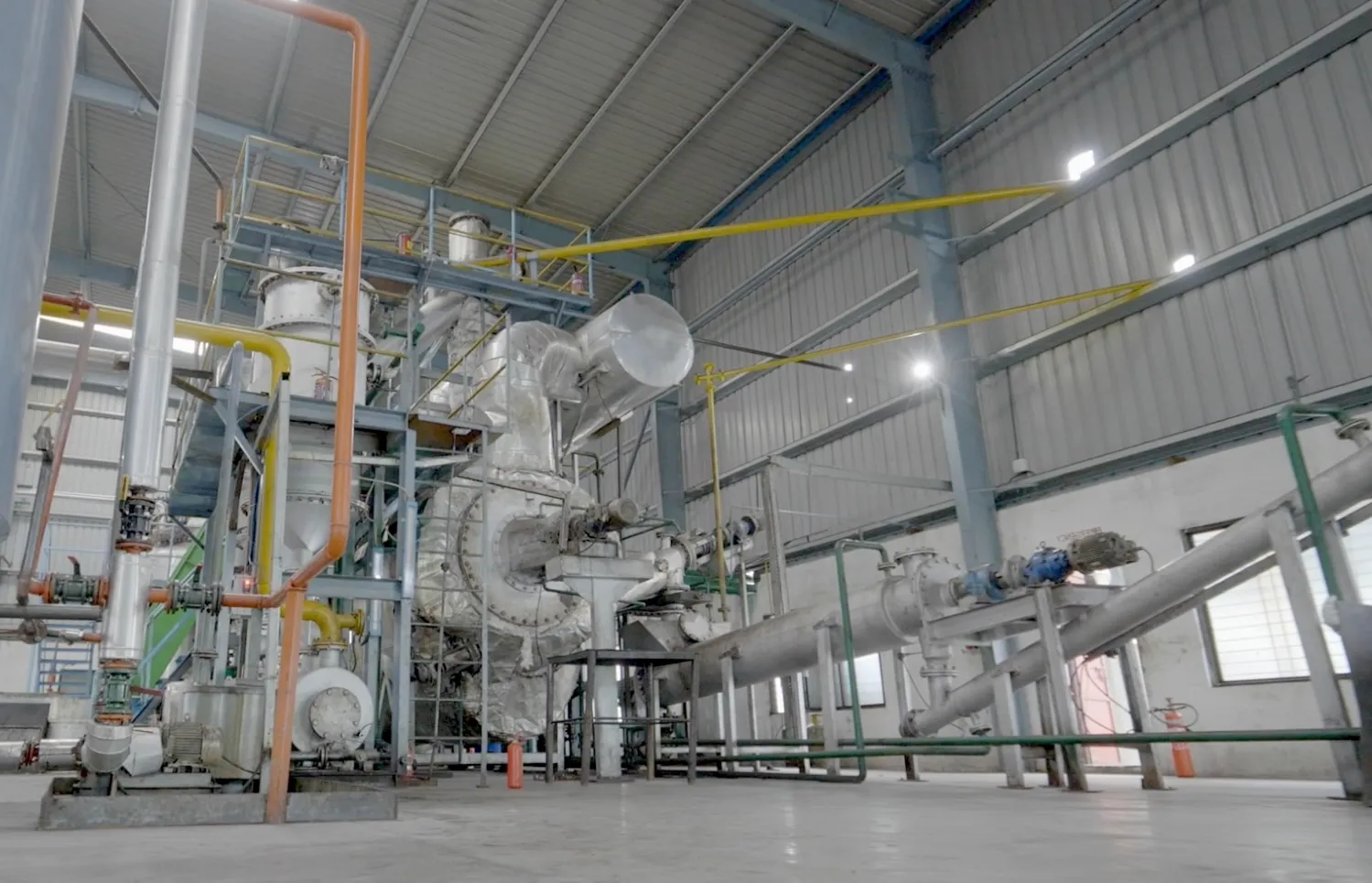
Automated carbon discharge system on a continuous pyrolysis plant
Frequently Asked Questions
A continuous pyrolysis plant operates 24/7 without stopping for loading and unloading. Feedstock is continuously fed into the reactor, processed, and products are continuously discharged. This contrasts with batch plants that must be loaded, heated, cooled, and emptied in cycles. Continuous plants use rotary kiln, screw/auger, or fluidized bed reactors.
Continuous plants offer: 50-60% lower operating costs per tonne due to elimination of heat-cool cycles; 60-80% less labor per shift; more consistent product quality (essential for ISCC certification); higher annual throughput from same reactor volume; better energy efficiency through continuous heat recovery; and longer equipment life due to reduced thermal cycling.
Continuous pyrolysis plants typically start at 5-10 TPD (tonnes per day). Below this capacity, the economics rarely justify the higher capital cost compared to batch plants. The sweet spot for continuous operation is 10-50 TPD, where the OPEX savings over batch plants deliver strong ROI.
Well-designed continuous plants run for 7,000-8,000 hours per year (80-90% uptime), stopping only for planned maintenance every 2-4 months. Scheduled maintenance typically takes 3-7 days. Some operators achieve 8,200+ hours/year with rolling maintenance schedules.
Yes, but feedstock changes require process adjustments (temperature, feed rate, residence time) and a transition period. Multi-feedstock plants are designed with flexible operating parameters. However, mixing feedstocks in a single batch (e.g., tires + plastics) is generally not recommended as it complicates product quality control.
Get a Free Consultation
Tell us about your pyrolysis project and our engineers will get back to you within 24 hours.
Get a Free Project Assessment →Explore More
Batch Pyrolysis Plant
Lower-cost entry point for smaller operations and developing markets.
Pyrolysis Plant Cost Guide
Complete pricing for batch vs. continuous at every capacity level.
Biomass Pyrolysis Plant
Continuous biomass pyrolysis for biochar and bio-oil production.
Tire Pyrolysis Plant
Process end-of-life tires with continuous rotary kiln technology.
ISCC Plus Certification
Continuous operation is often required for ISCC certification.
Plant Design Guide
5 design phases, key parameters, and plant layout best practices.