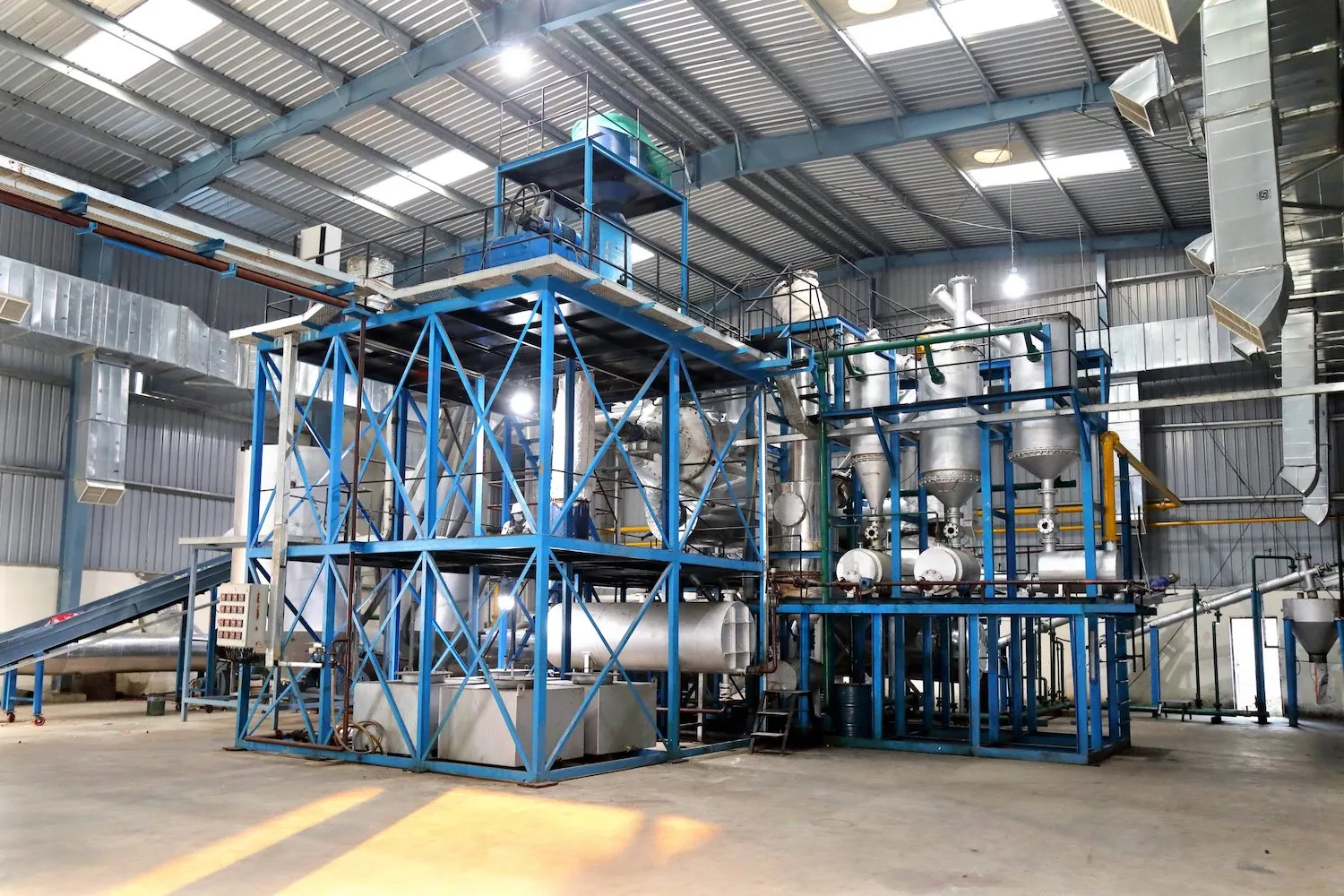
The Global Plastic Waste Crisis
Chemical recycling via pyrolysis is the only proven pathway to achieve true plastic circularity at scale.
What Is Plastic Pyrolysis?
Plastic pyrolysis is the thermal decomposition of polymer chains at 350-550 degrees C in an oxygen-free environment. The long-chain hydrocarbon polymers that make up plastics are broken down into shorter-chain hydrocarbons — essentially reversing the polymerization process.
The resulting pyrolysis oil is chemically similar to crude oil and can be:
- Used directly as industrial fuel (replacing heavy fuel oil or diesel)
- Refined via distillation into naphtha, diesel, and kerosene fractions
- Fed into steam crackers at petrochemical plants to produce new ethylene and propylene for virgin-quality plastic production
This last pathway — plastic-to-plastic (P2P) via chemical recycling — is driving massive industry investment, with major petrochemical companies (BASF, Shell, SABIC, LyondellBasell) all pursuing pyrolysis-based feedstock recycling.
Suitable Plastics & Oil Yields
| Plastic Type | Oil Yield | Char | Gas | Oil Quality | Suitability |
|---|---|---|---|---|---|
| HDPE / LDPE / LLDPE | 75-85% | 5-10% | 10-15% | High — excellent naphtha/diesel feedstock | Excellent |
| Polypropylene (PP) | 75-85% | 5-8% | 10-15% | High — similar to PE | Excellent |
| Polystyrene (PS) | 60-70% | 5-10% | 15-25% | High styrene content — chemical value | Excellent |
| Mixed Plastics (2-7) | 60-75% | 10-15% | 15-20% | Moderate — requires further refining | Good |
| Multi-Layer Packaging | 55-70% | 10-15% | 15-20% | Moderate — aluminium recovery possible | Good |
| PET | 30-50% | 15-25% | 20-30% | Lower — higher acid content in oil | Limited |
Important: PVC must be excluded or limited to <5% of feedstock. PVC releases corrosive hydrochloric acid (HCl) during pyrolysis, damaging equipment and contaminating products. Effective sorting is essential.
Need help selecting the right plastic pyrolysis technology? APChemi's engineers have designed 49+ commercial plants globally.
How a Plastic Pyrolysis Plant Works
A typical plastic pyrolysis plant follows this process flow:
Sorting & Washing
Incoming plastic waste is sorted to remove PVC, metals, glass, and organic contaminants. Washing removes dirt and labels
Shredding & Drying
Sorted plastics are shredded to 20-50mm flakes and dried to <5% moisture content
Feeding
Plastic flakes enter the pyrolysis reactor via screw feeders with inert gas purging to prevent oxygen entry
Pyrolysis Reaction
Plastics are heated to 350-550 degrees C. Polymer chains crack into smaller hydrocarbon molecules that vaporize
Condensation
Hydrocarbon vapors pass through multi-stage condensers. Heavier fractions condense first; lighter fractions at lower temperatures
Gas Cleaning & Recycling
Non-condensable gas is scrubbed, compressed, and used as process fuel — reducing external energy costs
Oil Storage & Refining
Crude pyrolysis oil is stored and optionally distilled into naphtha, diesel, and heavy fractions for premium markets
Chemical Recycling Pathway
The highest-value application for plastic pyrolysis oil is chemical recycling — converting waste plastics back into virgin-quality plastics. This pathway achieves true plastic-to-plastic circularity:
Plastic-to-Plastic (P2P) Value Chain
ISCC Plus mass balance certification tracks the circular content through the entire chain
The resulting products are chemically identical to fossil-based plastics and suitable for food-contact and medical applications — unlike mechanical recycling which degrades polymer properties.
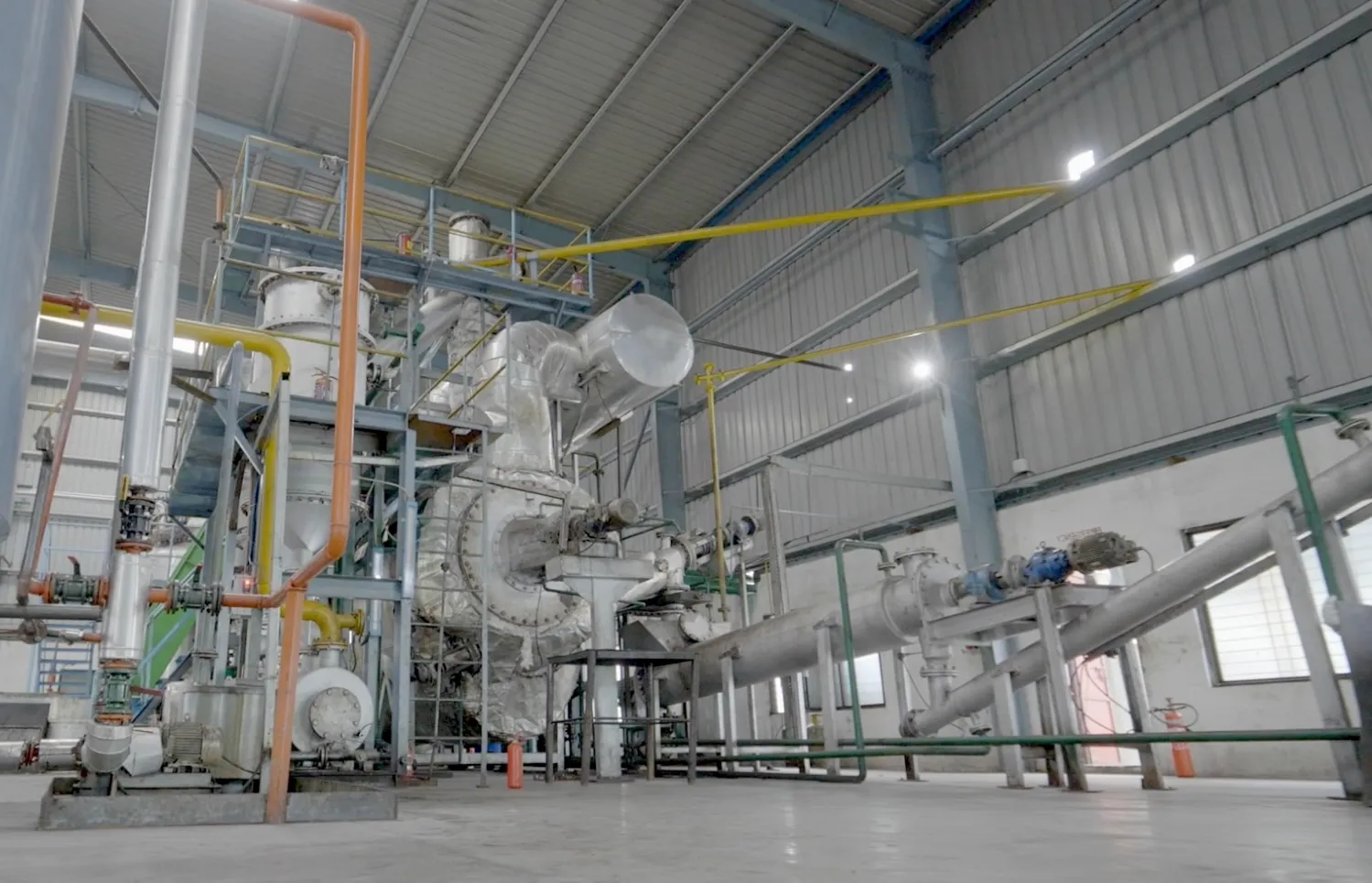
APChemi's automated continuous pyrolysis plant
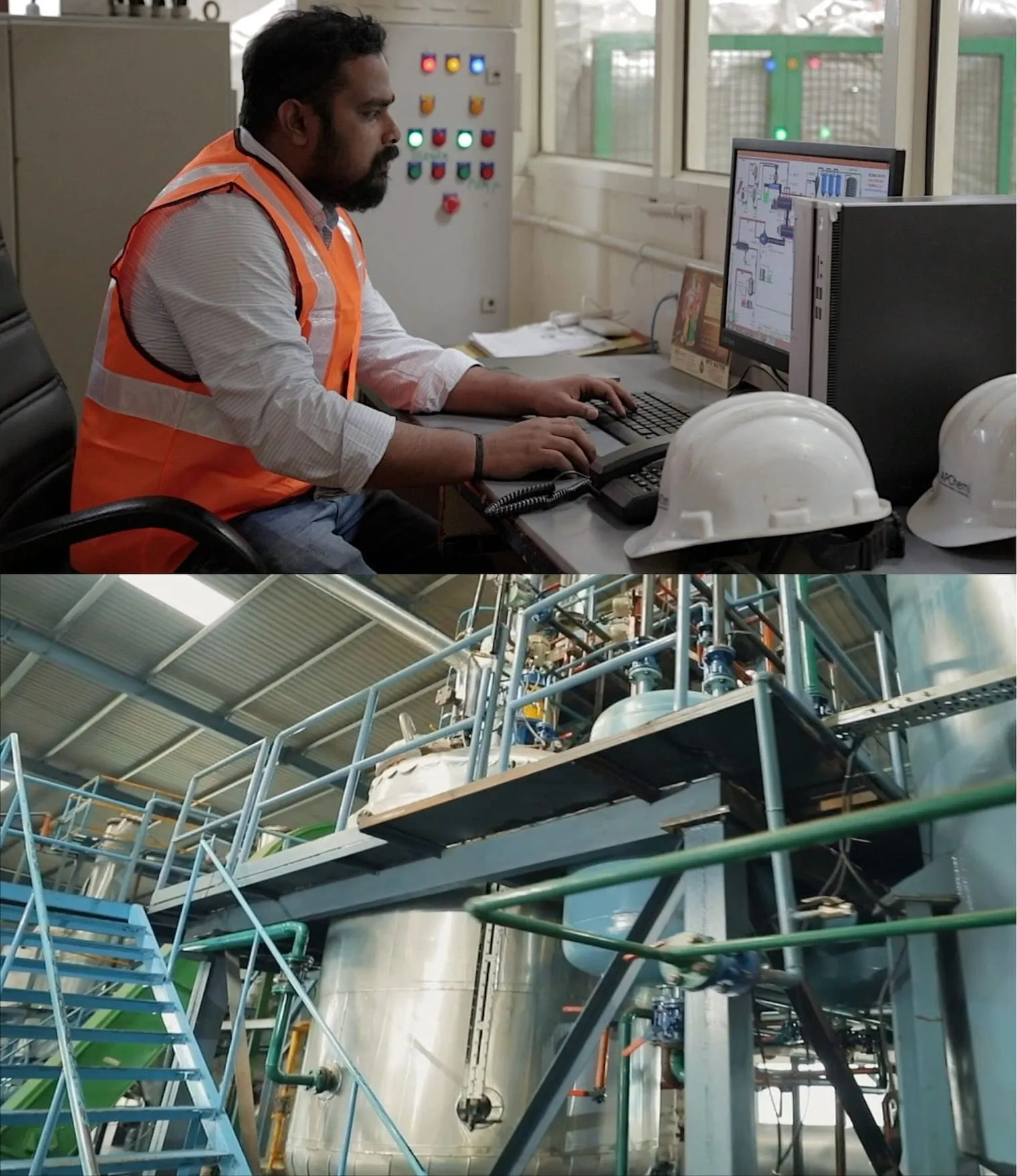
Plant control room and operations
Pre-Processing Requirements
Plastic feedstock quality directly impacts plant performance and product quality. Critical pre-processing steps include:
! PVC Removal
Near-infrared (NIR) sorters, density separation, or manual sorting to eliminate PVC contamination. PVC must be <5% of feedstock.
M Metal Removal
Magnetic separators for ferrous metals; eddy current separators for aluminium. Essential for equipment protection.
W Washing & Drying
Friction washers and float-sink tanks remove contamination. Thermal or mechanical dryers reduce moisture below 5%.
S Size Reduction
Shredders and granulators produce uniform 20-50mm flakes. Consistent size improves feeding and reaction uniformity.
Pre-processing typically adds 10-20% to total plant CAPEX but is essential for consistent operation and product quality.
Cost Overview
5 TPD
Batch operation, pilot or entry-level
10-20 TPD
Continuous, ISCC-eligible, best ROI
50+ TPD
Industrial-scale, lowest per-tonne cost
20 TPD plant revenue: $1.5M - $3M/year
Processing mixed polyolefins. Revenue depends on oil prices, market access, and whether oil is sold crude or distilled.
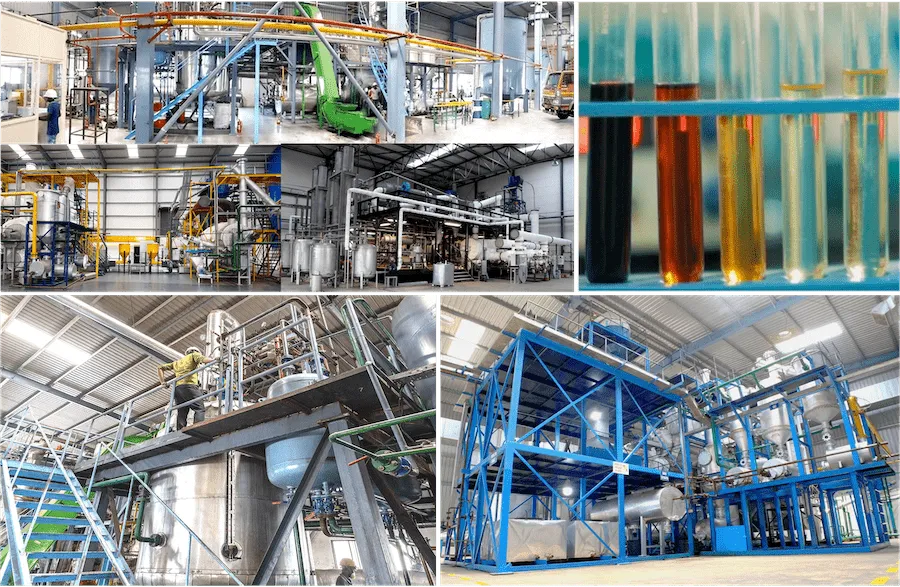
Interested in chemical recycling? APChemi works with Shell, BASF, and leading petrochemical companies on plastic circularity projects.
APChemi's Plastic Pyrolysis Expertise
Trusted by Global Petrochemical Leaders
Chemical Recycling Specialists
- ✓ Petrochemical-grade feedstock production
- ✓ Steam cracker quality naphtha specification
- ✓ P2P pathway design and optimization
- ✓ Chlorine/contaminant management solutions
ISCC Plus Certification
- ✓ Full certification support for circular plastics
- ✓ Mass balance chain of custody documentation
- ✓ GHG savings calculation and reporting
- ✓ Access to premium European markets
R&D Lab Testing
- ✓ Test your specific plastic waste streams
- ✓ Determine yields, oil quality, and process parameters
- ✓ Chlorine and contaminant characterization
- ✓ Scale-up recommendations with real data
Oil Purification
- ✓ Own 15,000 L/day distillation plant
- ✓ PUREMAX purification system for PUROIL production
- ✓ Chlorine removal to <10 ppm
- ✓ Naphtha-grade PUROIL product specification
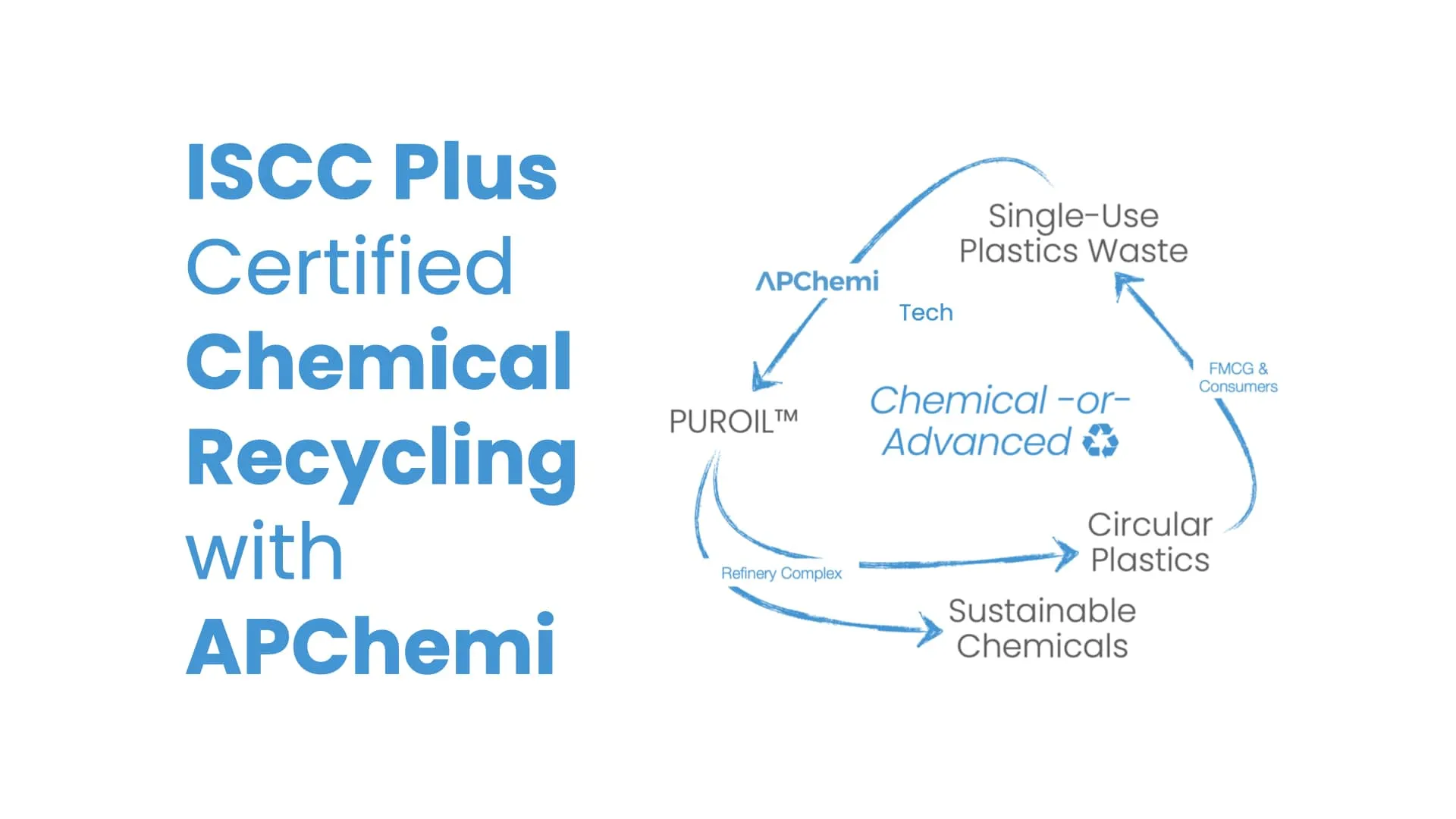
ISCC Plus certified chemical recycling
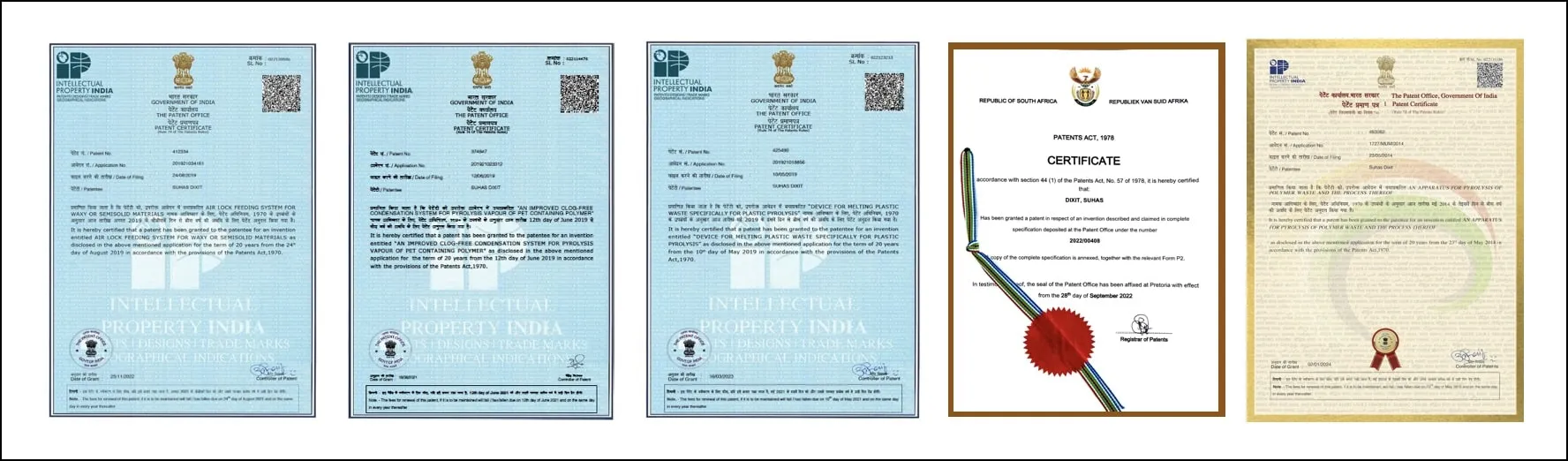
12+ patents in pyrolysis and oil purification technology

Watch how APChemi's pyrolysis technology converts waste plastic into fuel oil, carbon black, and syngas at commercial scale.
Chemical Recycling Companies
Find plastic pyrolysis operators and chemical recycling companies converting waste plastics into circular feedstock.
Frequently Asked Questions
Pyrolysis can process most thermoplastics: PE (HDPE, LDPE, LLDPE), PP, PS, and mixed plastics. These are classified as polyolefins and make up 60-70% of plastic waste. PET can be processed but yields lower oil quality. PVC must be excluded or limited to <5% as it produces corrosive HCl gas. Multi-layer packaging (MLP) can also be processed with appropriate pre-treatment.
Polyolefin plastics (PE, PP) yield 70-85% pyrolysis oil, making them the most productive feedstocks. PS yields 60-70%. Mixed plastic waste typically yields 60-75%. The oil is a hydrocarbon mixture similar to crude oil that can be used as fuel or further refined into naphtha, diesel, and chemical feedstock.
A 5 TPD batch plastic pyrolysis plant costs $60,000-$200,000 for equipment. A 10-20 TPD continuous plant ranges from $300,000-$2M for equipment or $800,000-$4M turnkey. Pre-processing equipment (washing, shredding, drying) typically adds 10-20% to total CAPEX.
Yes. Plastic pyrolysis is classified as chemical recycling (also called advanced recycling or feedstock recycling). It converts waste plastics back into hydrocarbon feedstock that can produce new plastics — achieving true circularity. The EU, US, UK, and other jurisdictions recognize chemical recycling in their waste hierarchy and recycling targets.
Yes, through a process called plastic-to-plastic (P2P) or circular plastics. Pyrolysis oil is purified and sent to a steam cracker (naphtha cracker) at a petrochemical complex, where it is converted back into ethylene, propylene, and other monomers used to produce virgin-quality plastics. ISCC Plus certification tracks the mass balance through this chain.
Get a Free Consultation
Tell us about your pyrolysis project and our engineers will get back to you within 24 hours.
Get a Free Project Assessment →Explore More
Pyrolysis Plant Cost Guide
Detailed pricing for plastic pyrolysis plants by capacity and region.
Chemical Recycling
How pyrolysis enables circular plastics through chemical recycling pathways.
EPR & Pyrolysis
How EPR mandates drive demand for plastic pyrolysis globally.
Tire Pyrolysis Plant
Process end-of-life tires into oil, carbon black, and steel.
Continuous Pyrolysis Plant
24/7 operation for higher throughput and better product quality.
Oil Purification
Upgrade crude pyrolysis oil for petrochemical feedstock applications.