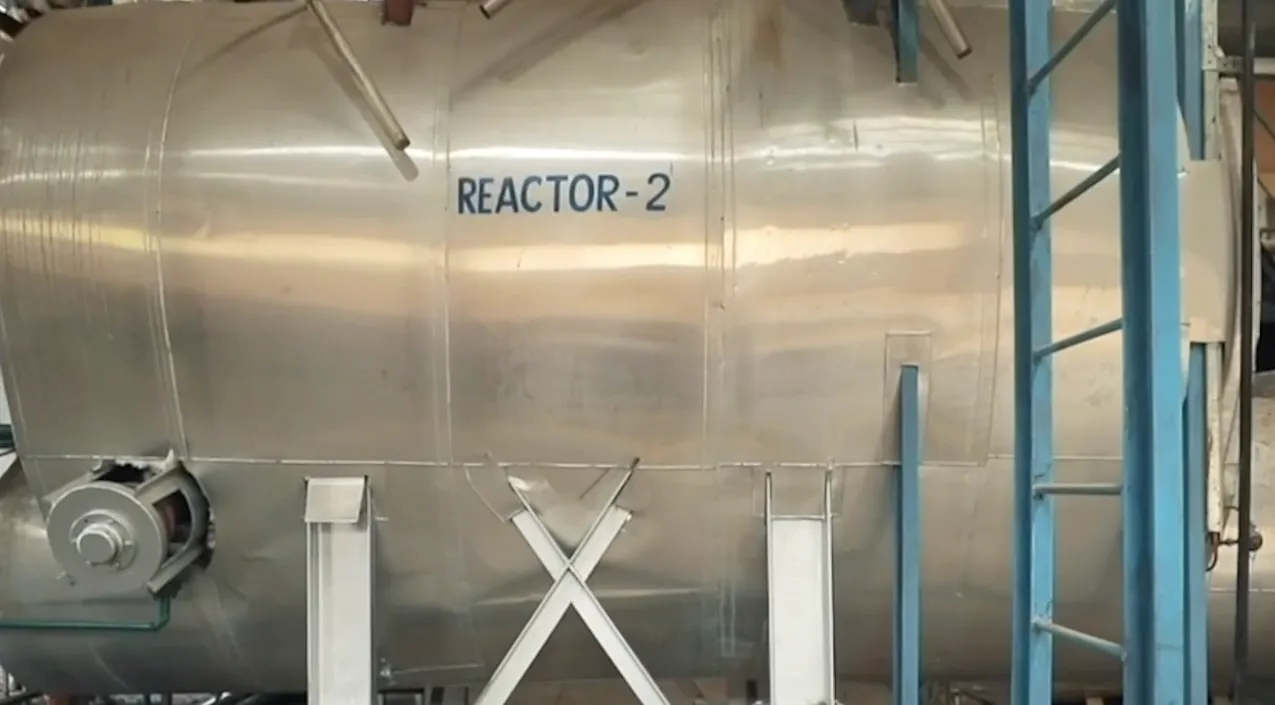
Batch Pyrolysis at a Glance
How Batch Pyrolysis Works
A batch pyrolysis plant follows a cyclic process where each complete cycle takes 10-20 hours. Understanding the cycle phases is key to calculating throughput and operating costs:
Loading feedstock
1–2 hoursManual or semi-automated loading via crane or conveyor
Sealing & purging
0.5–1 hourSeal reactor, purge oxygen with nitrogen or steam
Heating to target temp
2–4 hoursExternal burners heat reactor from ambient to 400–550°C
Pyrolysis reaction
4–8 hoursHold temperature while collecting oil, gas, and char
Cooling
2–4 hoursCool reactor to safe handling temperature (<100°C)
Unloading products
1–2 hoursRemove char/rCB, clean reactor for next cycle
Total cycle time
10–20 hoursTypically 1–2 batches per day per reactor
During the pyrolysis phase, hot vapors exit the reactor and pass through condensers to collect liquid oil. Non-condensable gas is either flared or recycled as supplementary fuel. Solid residue (char or rCB) remains in the reactor and is removed after cooling.
The Heat-Cool Cycle Problem
Every batch cycle wastes 30-40% of energy heating the reactor from ambient to 400-550°C, then discarding that heat during cooling. This is the fundamental inefficiency of batch pyrolysis — and why continuous plants achieve 50-60% lower operating costs per tonne.
Common Batch Reactor Designs
Horizontal Rotary
Horizontal cylinder that rotates slowly during operation for even heating distribution.
- ✓ 5–15 tonnes per batch
- ✓ Most common commercial design
- ✓ Best for tires & plastics
Vertical Retort
Upright cylindrical vessel loaded from the top, gravity-assisted discharge.
- ✓ 1–5 tonnes per batch
- ✓ Popular for biochar production
- ✓ Long residence time (slow pyrolysis)
Fixed-Bed Reactor
Stationary reactor with external heating jacket — the simplest design available.
- ✓ 0.5–5 tonnes per batch
- ✓ Simplest construction
- ✓ Ideal for lab & pilot scale
Pilot & Small-Scale Batch Systems
Batch reactors are widely used for pilot testing and small-scale commercial operations. They allow operators to:
- • Validate pyrolysis yields with specific feedstocks
- • Generate product samples for market qualification
- • Test process parameters before large-scale investment
- • Start revenue generation with minimal capital
APChemi operates pilot-scale batch reactors at its R&D facility for feedstock testing and process optimization.
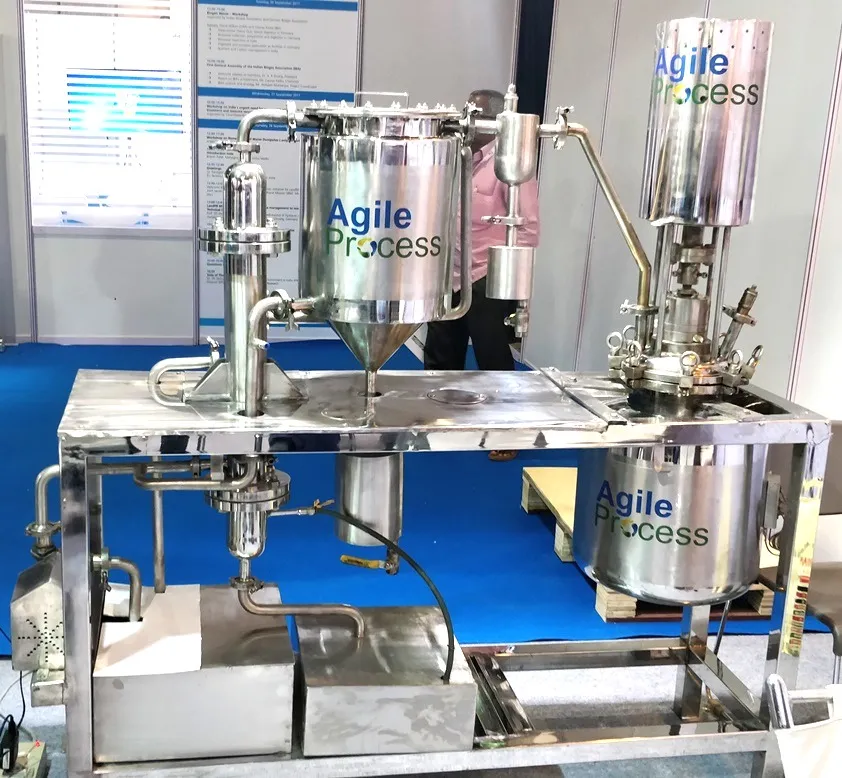
Pilot-scale batch reactor at testing facility
Not sure whether batch or continuous is right for your project? APChemi will evaluate your feedstock, market, and budget to recommend the optimal configuration.
When Batch Makes Sense
Limited Capital (<$200K)
When starting with under $200,000 for equipment — batch is the only option at this budget level.
Pilot / Proof-of-Concept
Testing a new feedstock or market before committing to a large continuous plant investment.
Low Labor Costs ($2–5/hr)
In regions where labor is inexpensive, the higher labor requirements of batch plants are offset by savings on equipment.
Small Feedstock Volumes
When available feedstock is under 10 TPD, batch may be more practical than running a continuous system below capacity.
Intermittent Operation
When 24/7 operation is not feasible due to power availability, feedstock supply, or regulatory constraints.
Regulatory Testing
Generating product samples for market qualification and certification trials before scaling up.
Limitations of Batch Plants
● Higher OPEX per Tonne
$60–$90/tonne vs. $30–$60 for continuous — the heat-cool cycle wastes 30-40% of energy input.
● More Labor Intensive
10-20 workers per shift vs. 4-8 for continuous — loading, unloading, and monitoring each cycle requires significant manpower.
● Inconsistent Product Quality
Each batch varies in temperature profile, residence time, and product composition — making certification challenging.
● Difficult to Certify
ISCC Plus and other certifications require process consistency that batch plants struggle to maintain.
● Safety Concerns
Opening and closing the reactor between batches creates exposure to hot surfaces and residual gases.
● Shorter Equipment Life
Thermal cycling (repeated heating/cooling) accelerates metal fatigue, reducing reactor lifespan compared to continuous.
Cost Overview
Lowest Entry Cost in Pyrolysis
Batch plants offer the most accessible entry point into pyrolysis — starting from just $20,000 for micro-scale equipment. For detailed comparisons with continuous plants at every capacity level, see the complete cost guide.
Plant Construction & Installation
Batch plants have a significant advantage in construction time and simplicity:
- • 3-6 months from order to operation (vs. 12-18 months for continuous)
- • Simpler civil works and foundation requirements
- • Can be installed in smaller spaces with basic infrastructure
- • Many batch systems come as modular, pre-fabricated units

Batch plant construction and installation
Scaling Up: From Batch to Continuous
Many successful pyrolysis operators start with batch plants to prove the business model, then transition to continuous when scaling up. APChemi recommends this phased, de-risked approach for first-time operators:
Lab Testing at APChemi R&D
Test your feedstock at APChemi's R&D facility. Determine pyrolysis yields, product quality, and optimal process parameters.
Timeline: 2–4 weeksBatch Pilot Plant
Install a small batch plant to validate yields at commercial scale and begin market development for your products.
Timeline: 6–12 months operatingContinuous Scale-Up
Design and install a continuous plant using APChemi's PYROMAX reactor technology, based on proven parameters from the batch phase. This de-risked approach dramatically reduces failure risk.
Timeline: 12–18 months design & buildTechno-Commercial De-Risking Process
Validate the technology and economics before committing the bulk of your investment
- 1
Commit 5–8% of CAPEX
Based on a preliminary financial model — your only spend before the Go/No-Go decision.
- 2
Pilot Plant Validation at APChemi's R&D
Pyrolysis pilot testing Distillation & purification testing End-product sample approval by buyer - 3
Engineering Cost Estimation by APChemi
CAPEX & OPEX calculations 50–60% engineering completion incl. critical simulations - 4
Financial Modeling & DPR with 3rd-Party CA
NPV / IRR analysis Sensitivity analysis
Go / No-Go Decision
No-Go
Revisit pilot testing or engineering — refine and re-validate before re-deciding.
Go
Commit the balance 93–95% of CAPEX with the technology and economics already de-risked.
APChemi — From Lab to Commercial Scale
Whether you're starting with batch or ready for continuous, APChemi supports every stage
R&D / Lab Testing
- ✓ Feedstock testing before batch investment
- ✓ Yield & product quality analysis
- ✓ Process parameter optimization
- ✓ Sample generation for market testing
Plant Troubleshooting
- ✓ Batch plant yield improvement
- ✓ Cycle time optimization
- ✓ Emissions and safety improvements
- ✓ Upgrade path assessment
Plant Design & PMC
- ✓ Batch-to-continuous transition planning
- ✓ Equipment specification & procurement
- ✓ Project management consultancy
- ✓ Commissioning & startup support
Oil Purification
- ✓ Batch oil quality improvement
- ✓ Toll processing at APChemi facility
- ✓ PUREMAX purification technology
- ✓ Market access for purified oil
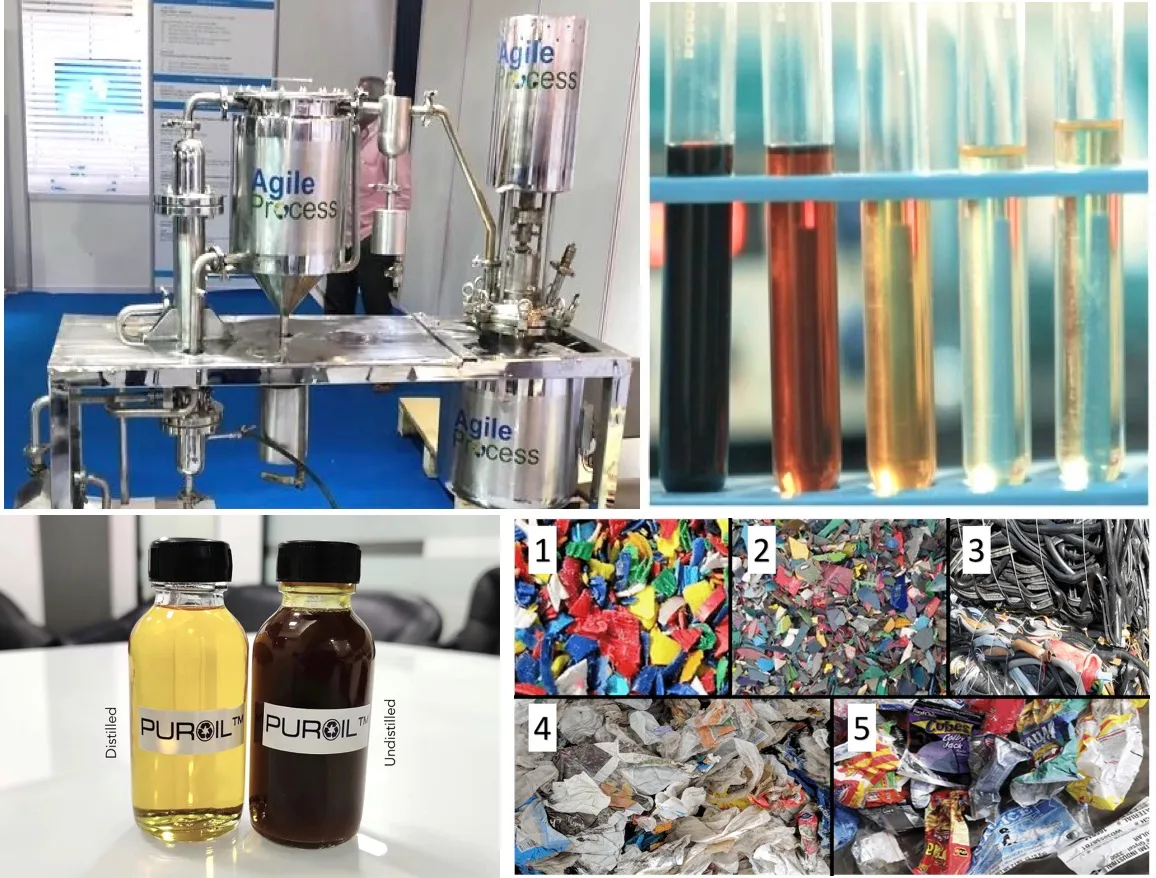
APChemi's R&D pilot facility — test your feedstock before investing in a batch plant
Frequently Asked Questions
A batch reactor is loaded with feedstock, sealed, heated to 400-550 degrees C over 2-4 hours, held at temperature for 4-8 hours while pyrolysis occurs, then cooled for 2-4 hours before being opened and emptied. One complete cycle takes 8-16 hours. The reactor is then cleaned, reloaded, and the cycle repeats.
A single batch reactor typically processes 1-10 TPD depending on size. Multiple reactors can be operated in parallel to increase throughput. For example, three 5-tonne batch reactors with staggered cycles can achieve effective throughput of 10-15 TPD.
A small batch plant (1-3 TPD) costs $20,000-$80,000 for equipment. A medium batch plant (5-10 TPD) costs $60,000-$250,000 for equipment or $150,000-$500,000 turnkey. These are the lowest entry costs in the pyrolysis industry, making batch plants popular in developing markets.
Generally no. Batch and continuous plants use fundamentally different reactor designs, feeding systems, and control architectures. Upgrading a batch plant to continuous typically requires replacing 70-80% of equipment, making it more cost-effective to build a new continuous plant. However, batch plants can serve as proof-of-concept before investing in continuous.
Key disadvantages include: higher operating costs per tonne (30-50% more than continuous); inconsistent product quality between batches; high labor requirements; lower energy efficiency due to heat-cool cycles; difficulty obtaining ISCC or quality certifications; shorter reactor lifespan from thermal cycling; and limited scalability.
Get a Free Consultation
Tell us about your pyrolysis project and our engineers will get back to you within 24 hours.
Get a Free Project Assessment →Explore More
Continuous Pyrolysis Plant
24/7 operation with 50-60% lower operating costs per tonne.
Pyrolysis Plant Cost Guide
Compare batch vs. continuous costs at every capacity level.
Tire Pyrolysis Plant
Batch tire pyrolysis for smaller operations and pilot testing.
Plastic Pyrolysis Plant
Convert waste plastics into oil and chemical feedstock.
R&D / Lab Testing
Test feedstock at bench scale before investing in a batch plant.
Plant Troubleshooting
Optimize your existing batch plant for better yields and efficiency.