ISCC Plus — The Key to Premium Pyrolysis Markets
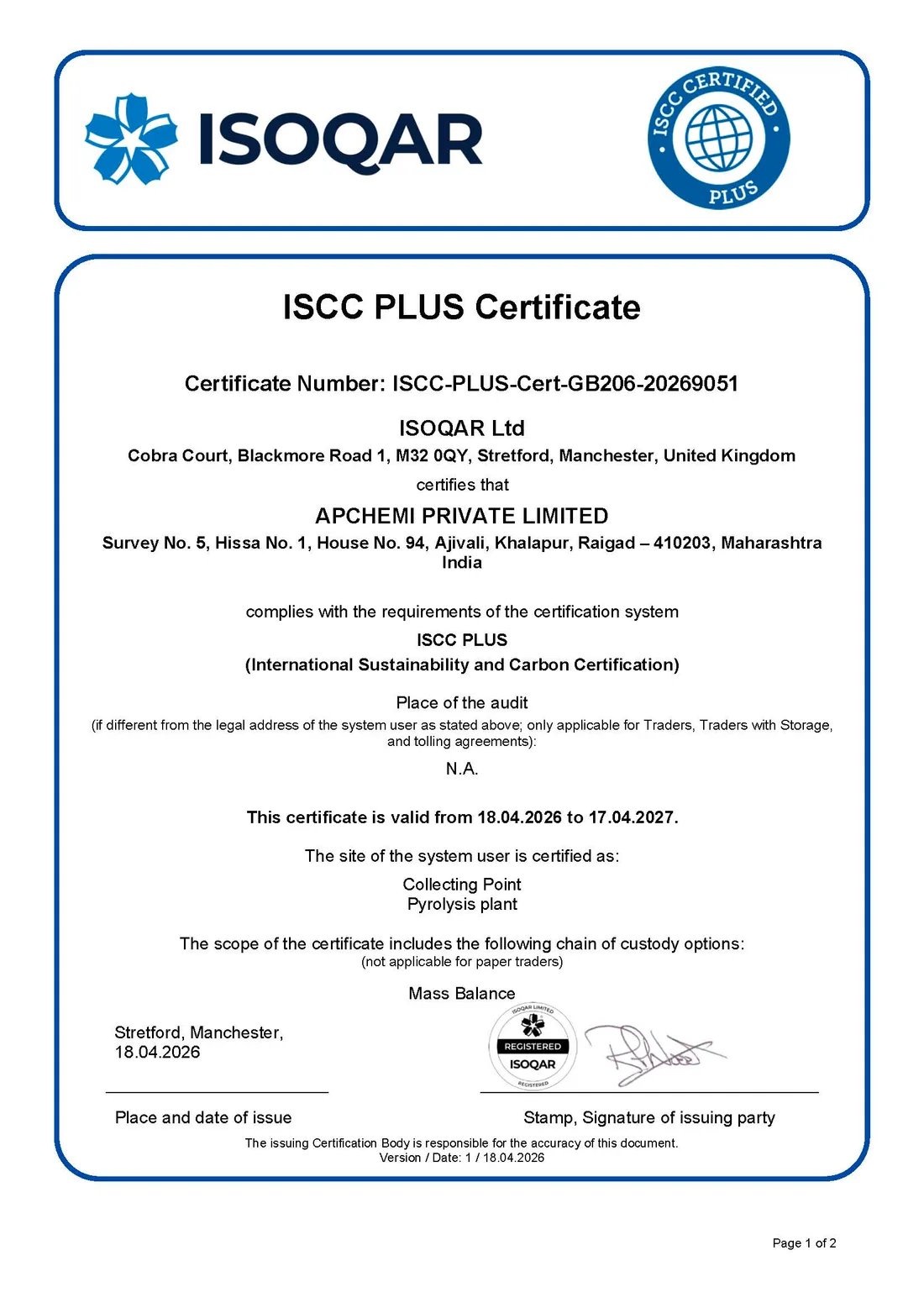
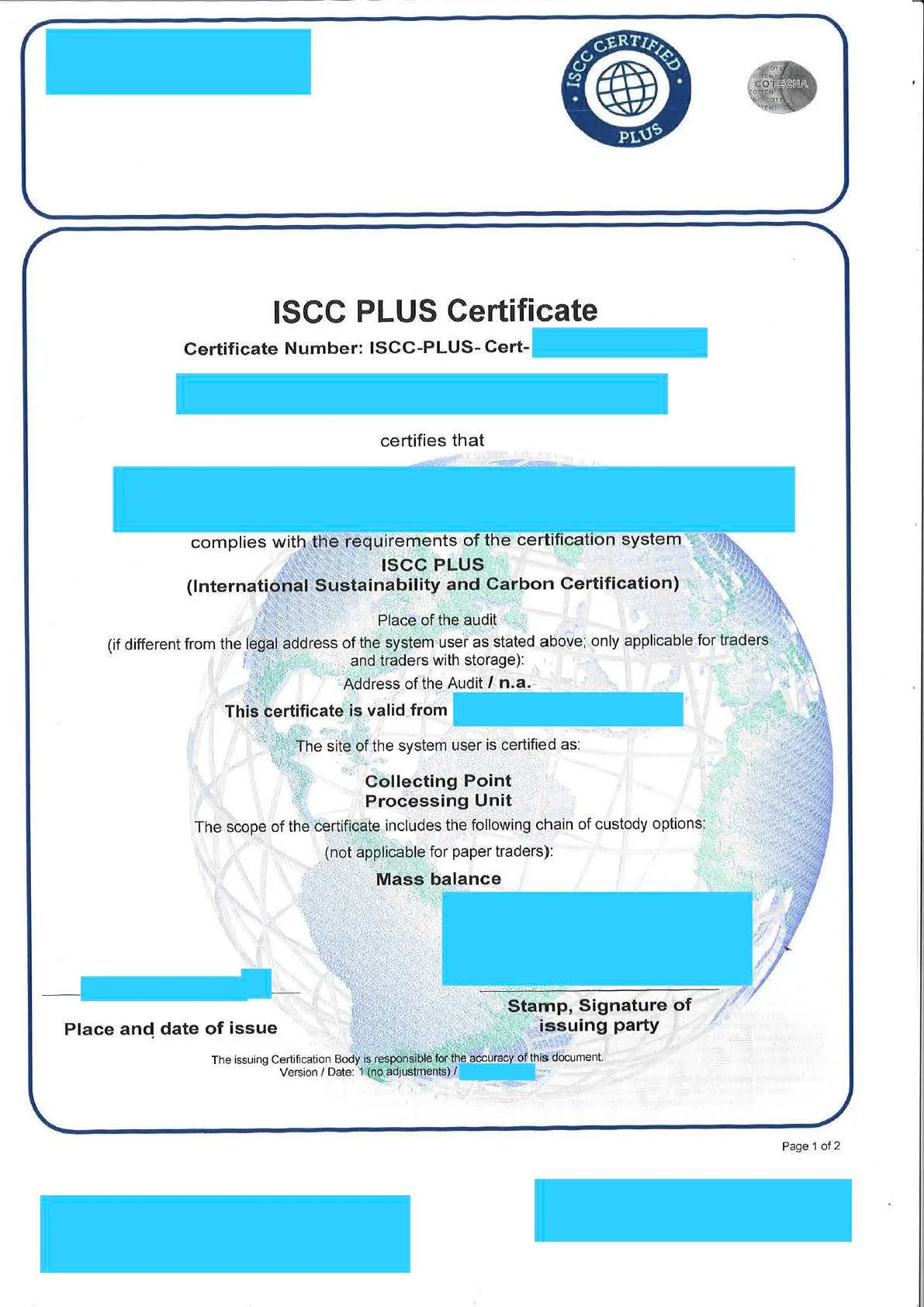
 Live certificate · valid to 17 April 2027
 APChemi Is ISCC PLUS Certified — Here Is the Proof
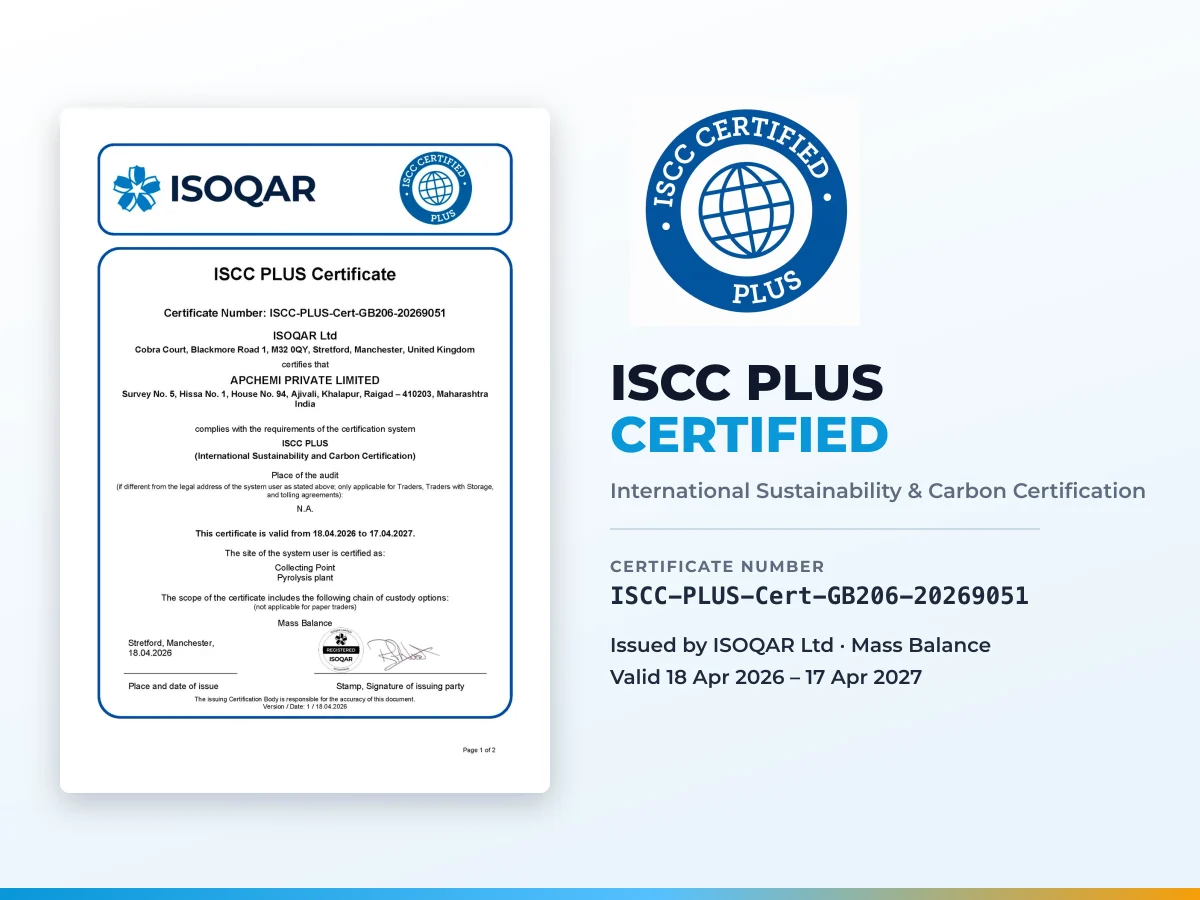
This is not theory. APChemi's own pyrolysis plant holds a current ISCC PLUS certificate, independently audited and issued by ISOQAR. The engineering, mass-balance bookkeeping and documentation that passed this audit are the same systems we build into your plant — which is why our clients reach ISCC PLUS faster and with fewer corrective actions.
- Certificate No.
- ISCC-PLUS-Cert-GB206-20269051
- Standard
- ISCC PLUS (International Sustainability and Carbon Certification)
- Certified site
- Collecting Point · Pyrolysis plant
- Chain of custody
- Mass Balance
- Issued by
- ISOQAR Ltd, Stretford, Manchester, United Kingdom
- Validity
- 18 April 2026 → 17 April 2027
What Is ISCC Plus?
ISCC Plus (International Sustainability and Carbon Certification) is a voluntary sustainability certification for bio-based and recycled materials in food, feed, chemicals, plastics, packaging, and energy markets. For pyrolysis operators, it unlocks the transition from fuel production to high-value circular feedstock supply.
Traceability
Documented chain of custody from waste feedstock to final product. Every kg of input and output is tracked and verified.
Sustainability Proof
Verified sustainable sourcing and processing practices. Greenhouse gas emissions calculated and documented per ISCC methodology.
Mass Balance
Recognized method for tracking recycled content through mixed processing, enabling "recycled content" claims on end products.
Market Access
Required by major petrochemical companies (BASF, Shell, SABIC) and brand owners for feedstock recycling partnerships.
Premium Pricing
ISCC-certified pyrolysis oil sells for $700-$1,100/MT vs. $400-$550/MT uncertified — a 30-100% premium.
Regulatory Compliance
EU Packaging Regulations, UK Plastic Packaging Tax, and similar schemes recognize ISCC Plus-certified recycled content.
Why ISCC Plus Matters for Pyrolysis
| Product | Without ISCC | With ISCC Plus | Premium |
|---|---|---|---|
| Crude Pyrolysis Oil | $400-550/MT (sold as fuel) | $700-1,100/MT (circular feedstock) | +30-100% |
| Distilled Naphtha | $500-600/MT | $800-1,200/MT | +60-100% |
| Recovered Carbon Black | $300-500/MT | $500-800/MT | +40-80% |
| Biochar (CDR) | $200-400/MT | $400-700/MT | +50-100% |
Certification ROI — Payback in Months
For a 20 TPD plant producing 15 tonnes of oil daily, ISCC certification generates $1.5-3M additional annual revenue from the price premium alone. Against a first-year certification cost of $15,000-$40,000, the investment pays for itself within the first week of certified production.
From Fuel to Feedstock — The ISCC Transformation
Without ISCC Plus, pyrolysis operators are limited to selling crude oil as industrial fuel — competing on price with fossil alternatives. With certification, the exact same product accesses higher-value chemical recycling markets where petrochemical companies pay premium prices for certified circular feedstock.
The certification adds no physical quality change but unlocks immense regulatory and commercial value. It's the single most impactful step a pyrolysis operator can take to improve project economics.
ISCC Plus certified pyrolysis oil
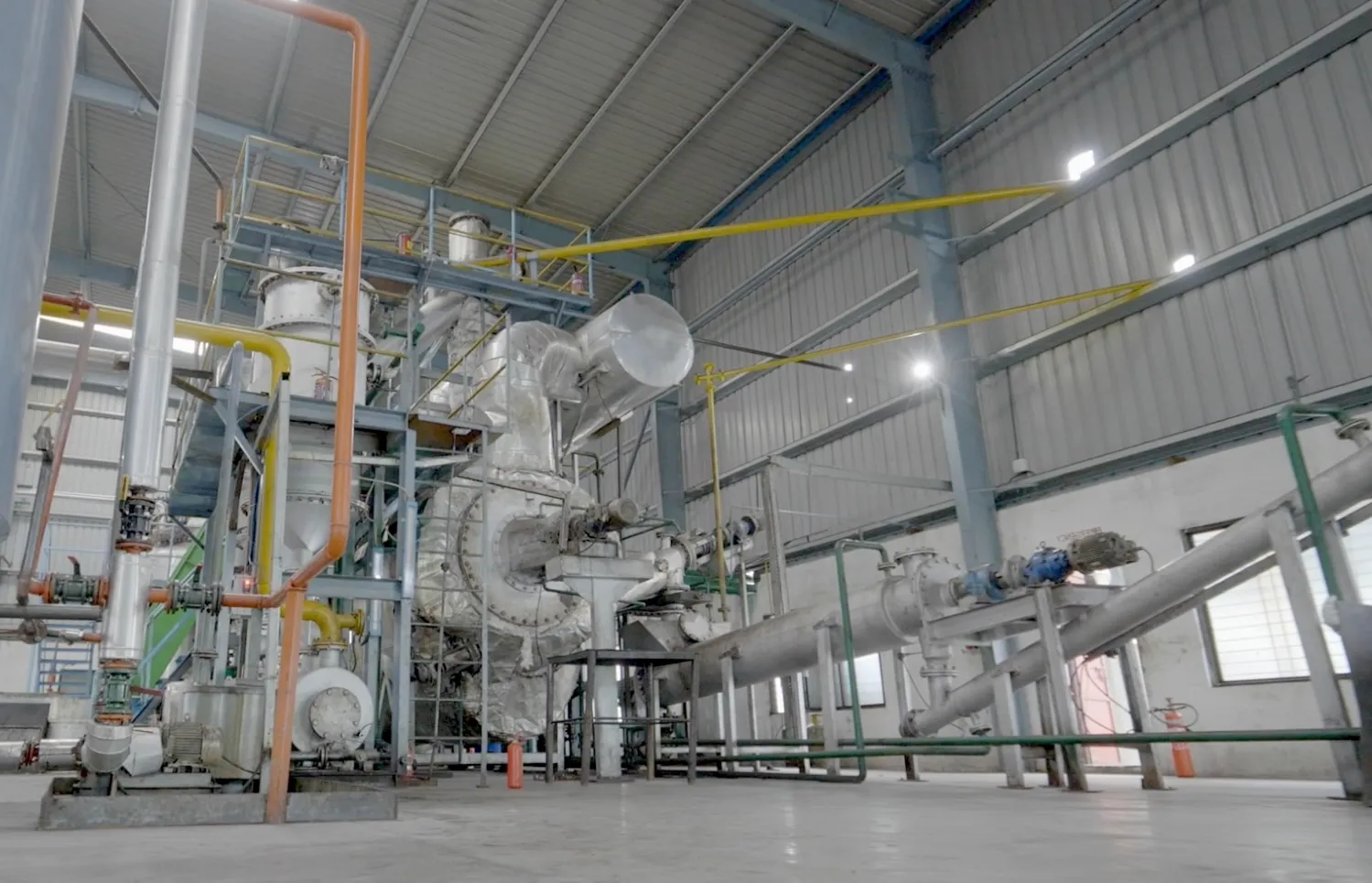
APChemi's own plant is ISCC PLUS certified — 4 ISCC PLUS plants operational + 1 coming up. Get expert support to fast-track your certification.
Key Requirements
ISCC Plus certification requires demonstrating compliance across several areas. Understanding these upfront helps design your plant and operations for certification from day one.
● Feedstock Traceability
Documented origin and sustainability status of all waste feedstock entering the plant. Each batch must have verified source documentation and waste classification.
● Mass Balance System
Accounting procedures that track recycled content from input to output with no more than 3-month reconciliation periods. All input/output quantities must balance within defined tolerances.
● Process Documentation
Operating procedures, quality control records, energy consumption data, and emissions monitoring. All production runs must be documented with full material flow tracking.
● Supplier Qualification
All feedstock suppliers must be qualified and documented. ISCC-certified suppliers are preferred. Supplier audit trail must be maintained for each delivery.
● GHG Calculations
Lifecycle greenhouse gas emissions calculated and documented per ISCC methodology. Includes feedstock transport, processing energy, and product distribution emissions.
● Continuous Improvement
Annual surveillance audits verify ongoing compliance and improvement. Certificate valid for 12 months, requiring renewal audit each year.
Certification Timeline
The typical journey from decision to ISCC-certified production takes 6-12 months. APChemi's experience can compress this timeline significantly.
Gap Analysis
Assess current operations against ISCC Plus requirements. Identify gaps in documentation, traceability, and process control. Develop a remediation roadmap.
Duration: 2-4 weeks
System Design
Develop mass balance procedures, documentation systems, supplier qualification processes, and sustainability declarations. Design monitoring and record-keeping workflows.
Duration: 4-8 weeks
Implementation
Install monitoring equipment, train staff, implement documentation processes, establish supplier chain of custody. Begin collecting data for mass balance verification.
Duration: 4-8 weeks
Internal Audit
Conduct internal pre-audit to verify readiness. Identify and address any remaining non-conformities before the formal certification audit.
Duration: 1-2 weeks
Certification Audit
Independent ISCC-approved auditor conducts on-site verification of all systems, processes, and documentation. Typically 2-3 days on-site for a pyrolysis facility.
Duration: 1-2 weeks
Certification Issued
Audit report reviewed, corrective actions completed if needed, ISCC Plus certificate issued. Valid for 12 months. Begin selling ISCC-certified products at premium prices.
Duration: 2-4 weeks • Certificate valid 12 months
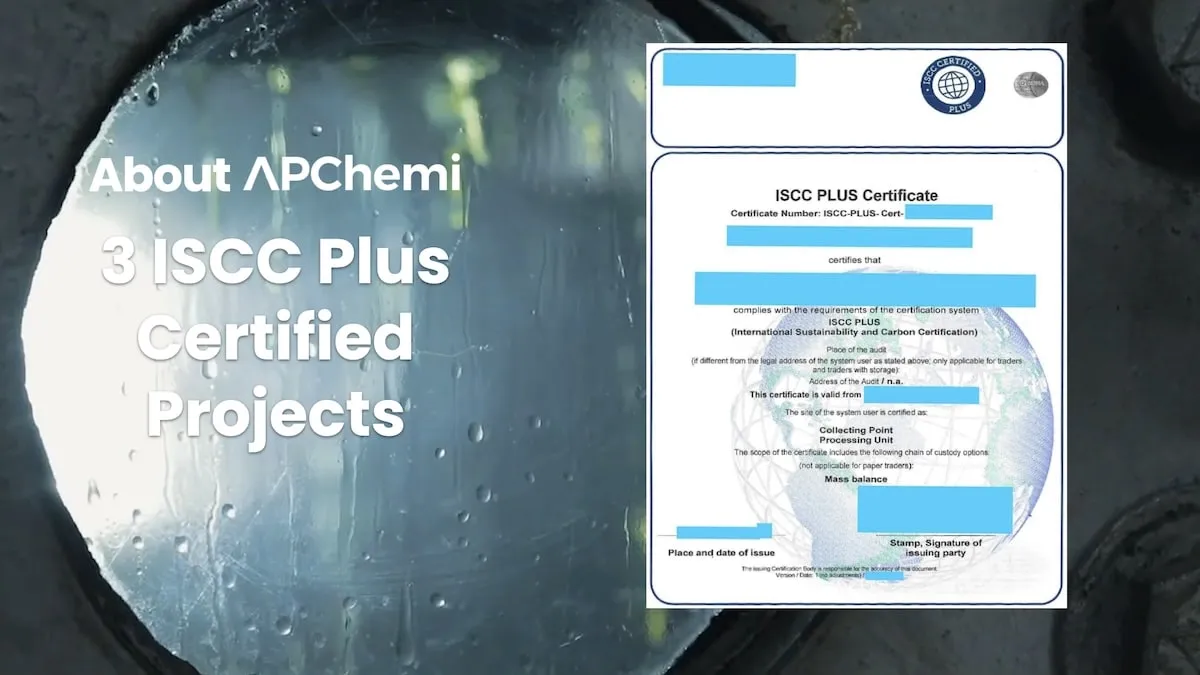
APChemi's ISCC Certification Track Record
APChemi has direct experience navigating ISCC Plus certification for multiple pyrolysis facilities. Our team understands the specific documentation, process control, and mass balance requirements that ISCC auditors look for in pyrolysis operations — knowledge that comes only from hands-on experience through the certification process.
We provide end-to-end support: from initial gap analysis through system design, staff training, internal audit, and certification audit attendance.
ISCC Plus certification records
Certification Costs
ISCC Plus certification involves several cost components. While not trivial, these costs are dwarfed by the revenue premium that certification unlocks.
Annual registration and licensing fee payable to ISCC
Per audit — initial certification plus annual surveillance
Staff time, documentation, monitoring systems setup
Total first-year investment: $15,000 - $40,000
The Numbers Speak for Themselves
A 20 TPD plant produces ~5,400 MT of oil annually. At a $300/MT premium for ISCC-certified oil, that's $1.6M additional annual revenue — against a $40K certification investment. That's a 40:1 ROI ratio in the first year alone.
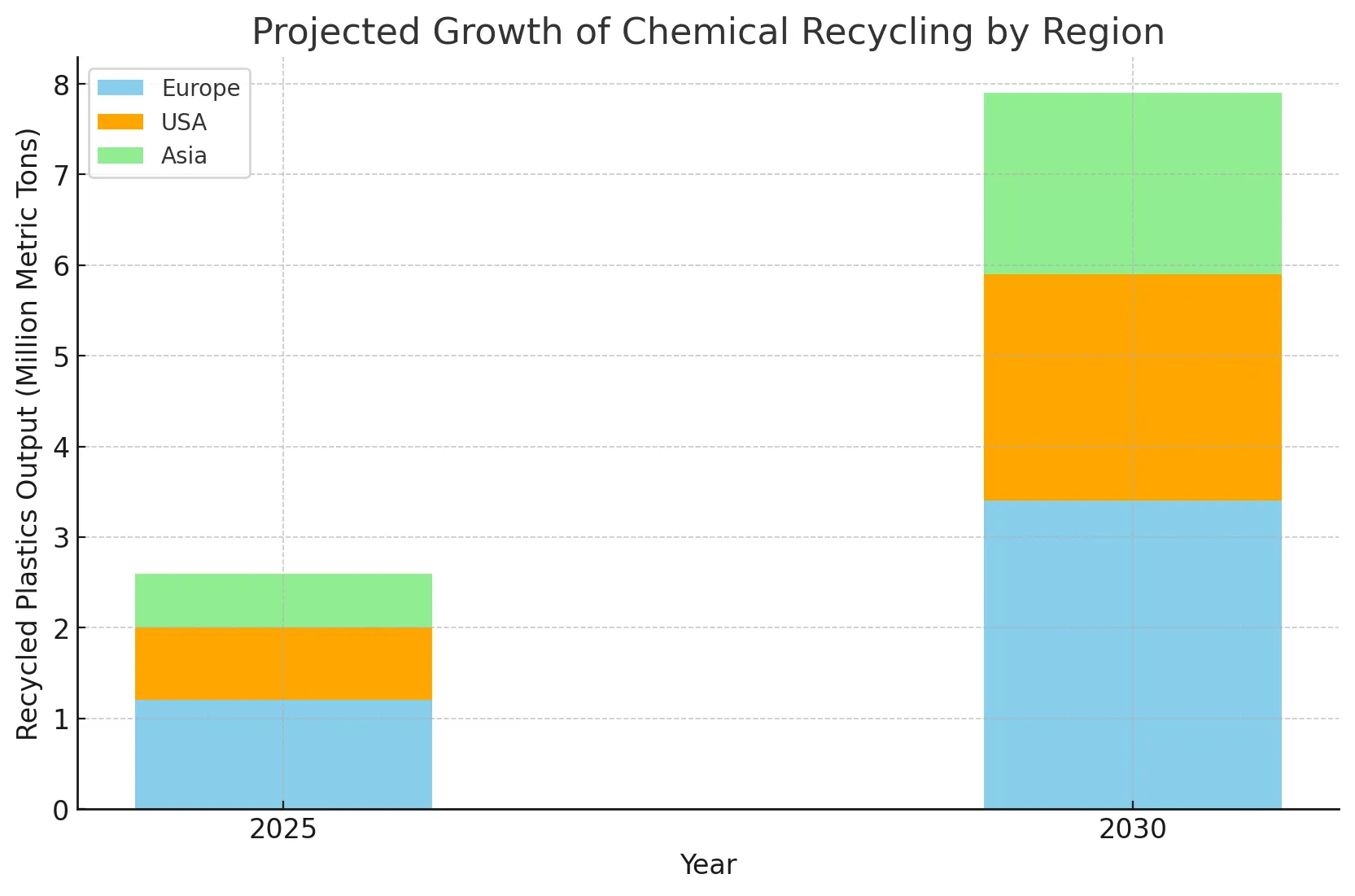
Projected growth of chemical recycling driving demand for ISCC certification
APChemi's ISCC Certification Support
APChemi provides comprehensive ISCC Plus certification support, drawing on hands-on experience with multiple certified pyrolysis facilities.
APChemi ISCC Certification Experience
Gap Analysis & Readiness
- ✓ Current operations assessment vs. ISCC requirements
- ✓ Gap identification and remediation roadmap
- ✓ Cost and timeline estimate for certification
System Design & Documentation
- ✓ Mass balance procedures and templates
- ✓ Supplier qualification processes
- ✓ Sustainability declarations and GHG calculations
Training & Implementation
- ✓ Staff training on ISCC requirements
- ✓ Monitoring system implementation
- ✓ Internal audit preparation and execution
Audit Support & Compliance
- ✓ Certification audit preparation and attendance
- ✓ Corrective action support if needed
- ✓ Annual surveillance audit support
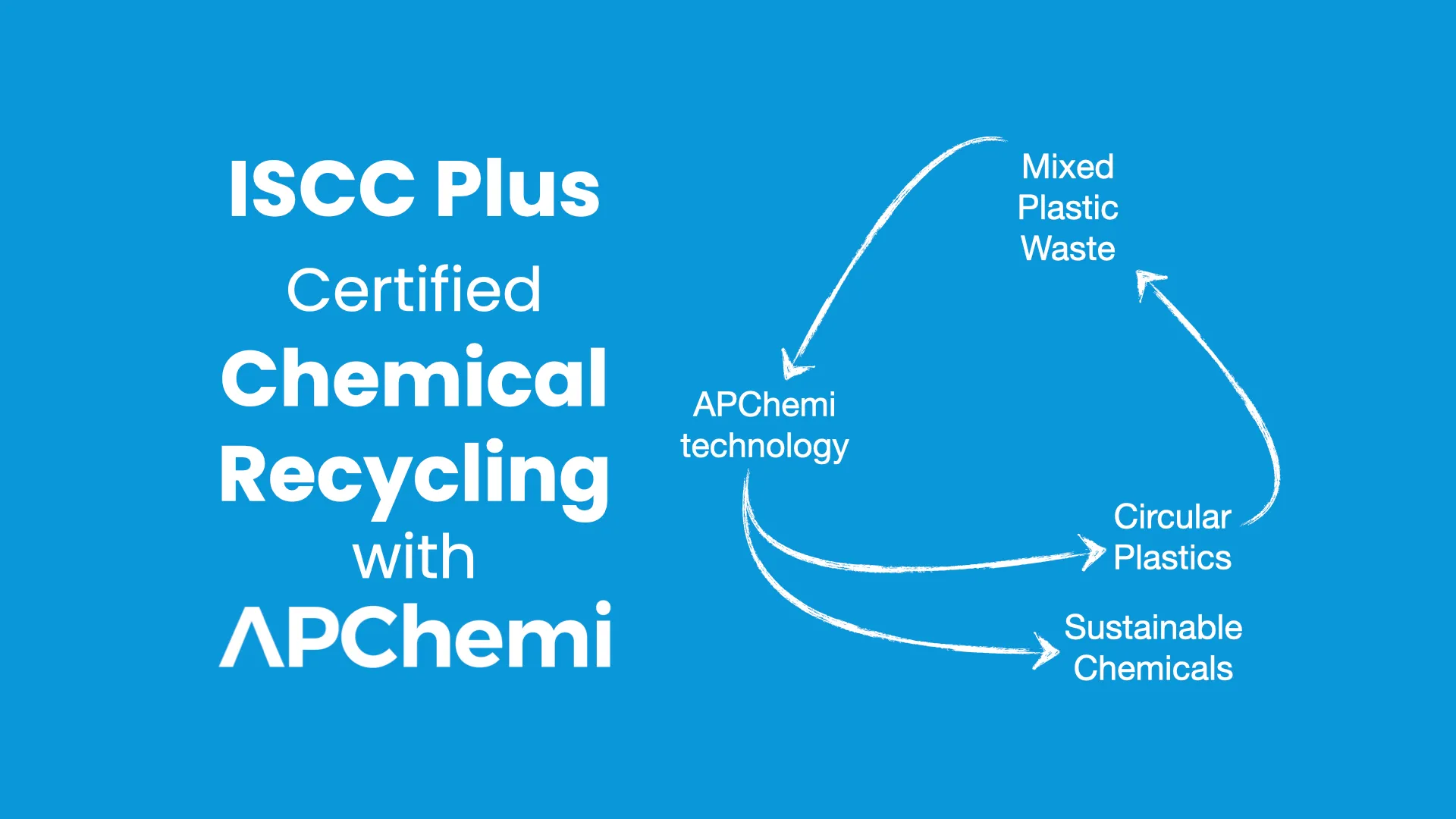
APChemi's ISCC Plus certified chemical recycling pathway
ISCC Certified Companies
Browse ISCC Plus and ISCC EU certified pyrolysis companies in our global directory.
Frequently Asked Questions
ISCC Plus (International Sustainability and Carbon Certification) is a globally recognized sustainability certification system for recycled and bio-based materials. For pyrolysis operators, it certifies that waste-derived products (pyrolysis oil, biochar, rCB) are produced sustainably and enables mass balance tracking through the supply chain, allowing end products to carry 'recycled content' claims.
ISCC Plus certification unlocks premium markets: ISCC-certified pyrolysis oil commands $700-$1,100/MT vs. $400-$550/MT uncertified. Petrochemical companies (BASF, Shell, SABIC) require ISCC certification for feedstock recycling. Brand owners need it to claim recycled content in packaging. It's increasingly becoming a market access requirement, not just a premium.
The typical timeline is 6-12 months from decision to certified production. This includes: documentation preparation (2-3 months), system implementation (2-4 months), initial audit (1 month), corrective actions if needed (1-2 months), and certification issuance. APChemi can accelerate the process through our own ISCC PLUS-certified plant and 4 operational ISCC PLUS plants (plus 1 more coming up).
Direct certification costs include: ISCC system fees ($3,000-$8,000/year), audit costs ($5,000-$15,000 per audit), and internal documentation effort. Total first-year cost is typically $15,000-$40,000. However, the price premium on certified products (30-100% higher) delivers ROI within months of certification.
Mass balance is an accounting method that tracks the proportion of recycled/sustainable content through a supply chain without requiring physical separation. For example, if a steam cracker processes 10% pyrolysis-derived naphtha mixed with 90% fossil naphtha, mass balance allows 10% of the output polymers to be sold as 'recycled content' — even though the molecules are mixed.
Get a Free Consultation
Tell us about your pyrolysis project and our engineers will get back to you within 24 hours.
Get a Free Project Assessment →Explore More
Chemical Recycling
ISCC Plus enables certified circular plastics through chemical recycling.
EPR & Pyrolysis
How EPR mandates create demand for ISCC-certified recycled content.
Oil Purification & Distillation
Purified ISCC-certified oil commands premium petrochemical feedstock prices.
Plastic Pyrolysis Plant
ISCC certification for plastic-derived pyrolysis oil and circular feedstock.
Tire Pyrolysis Plant
Certify tire-derived oil and rCB for sustainable product claims.
Contact APChemi
Get ISCC Plus certification support from our experienced team.