Why Purify Pyrolysis Oil?
The Problem with Crude Pyrolysis Oil
Crude pyrolysis oil straight from the condenser has several limitations that reduce its market value:
● High Sulfur Content
Tire pyrolysis oil contains 0.5-1.5% sulfur, exceeding limits for most fuel applications and causing corrosion.
● Mixed Fractions
Contains a broad boiling range from light naphtha to heavy residue, reducing value for any specific application.
● Particulates & Water
Suspended carbon particles and moisture degrade storage stability and combustion quality.
● Chlorine Contamination
Plastic-derived oil may contain chlorine compounds from PVC traces, causing equipment corrosion and emissions issues.

The Problem: Contaminated pyrolysis oil rejected by refineries
PUREMAX — APChemi's Purification Technology
PUREMAX is APChemi's proprietary pyrolysis oil purification system that addresses all crude oil limitations through an integrated process:
- Decontamination: Removes chlorine, oxygen, silica, and other contaminants to meet fuel specifications
- Desulfurization: Chemical treatment reduces sulfur from 1.5% to below specification limits
- Fractional distillation: Separates oil into defined market-grade fractions
- Quality assurance: In-house lab testing against fuel specifications
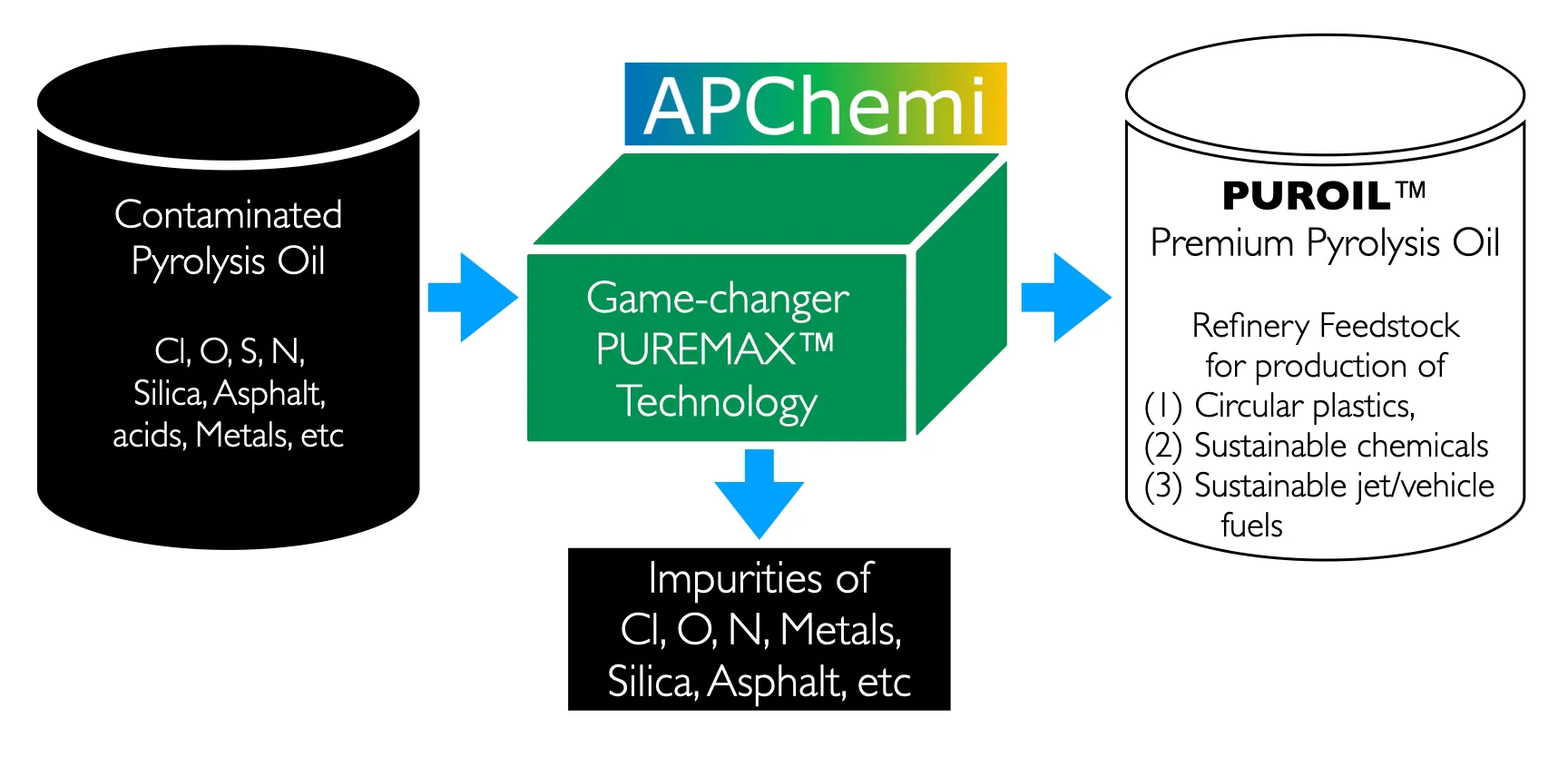
PUREMAX purification technology overview
Fractional Distillation Process
Pre-Treatment
Crude oil is filtered to remove particulates, dewatered, and heated to remove dissolved gases before entering the distillation column.
Atmospheric Distillation
Oil is heated in a distillation column. Lighter fractions (naphtha) vaporize first and condense at the top; heavier fractions condense at lower levels.
Vacuum Distillation
Residual heavy fractions undergo vacuum distillation to recover additional diesel-range material without thermal cracking.
Desulfurization
Chemical or catalytic treatment reduces sulfur content to meet fuel specifications — critical for tire pyrolysis oil.
Polishing & QC
Final filtration, color stabilization, and quality testing against fuel specifications before shipment to customers.

Complete purification process: decontamination, distillation, and quality control
Product Fractions & Value
| Fraction | Boiling Range | Typical Yield | Market Value | End Use |
|---|---|---|---|---|
| Light Naphtha | 30–150°C | 5–15% | $500–$800/MT | Solvent, petrochemical feedstock, gasoline blending |
| Middle Distillate (Diesel) | 150–350°C | 50–65% | $600–$900/MT | Industrial diesel replacement, marine fuel, generator fuel |
| Heavy Fuel Oil | 350–500°C | 15–25% | $350–$500/MT | Furnace oil replacement, bitumen blending, marine fuel |
| Residue | >500°C | 5–10% | $100–$200/MT | Carbon black feedstock, road surfacing additive |
Crude vs. Distilled — The Visual Difference
The quality improvement from distillation is immediately visible. Crude pyrolysis oil is dark, opaque, and viscous, while distilled fractions are clear, lighter in color, and have defined specifications:
- • Naphtha fraction: Clear, light yellow, low viscosity
- • Diesel fraction: Amber, defined flash point and cetane
- • Heavy fraction: Dark brown, high energy density
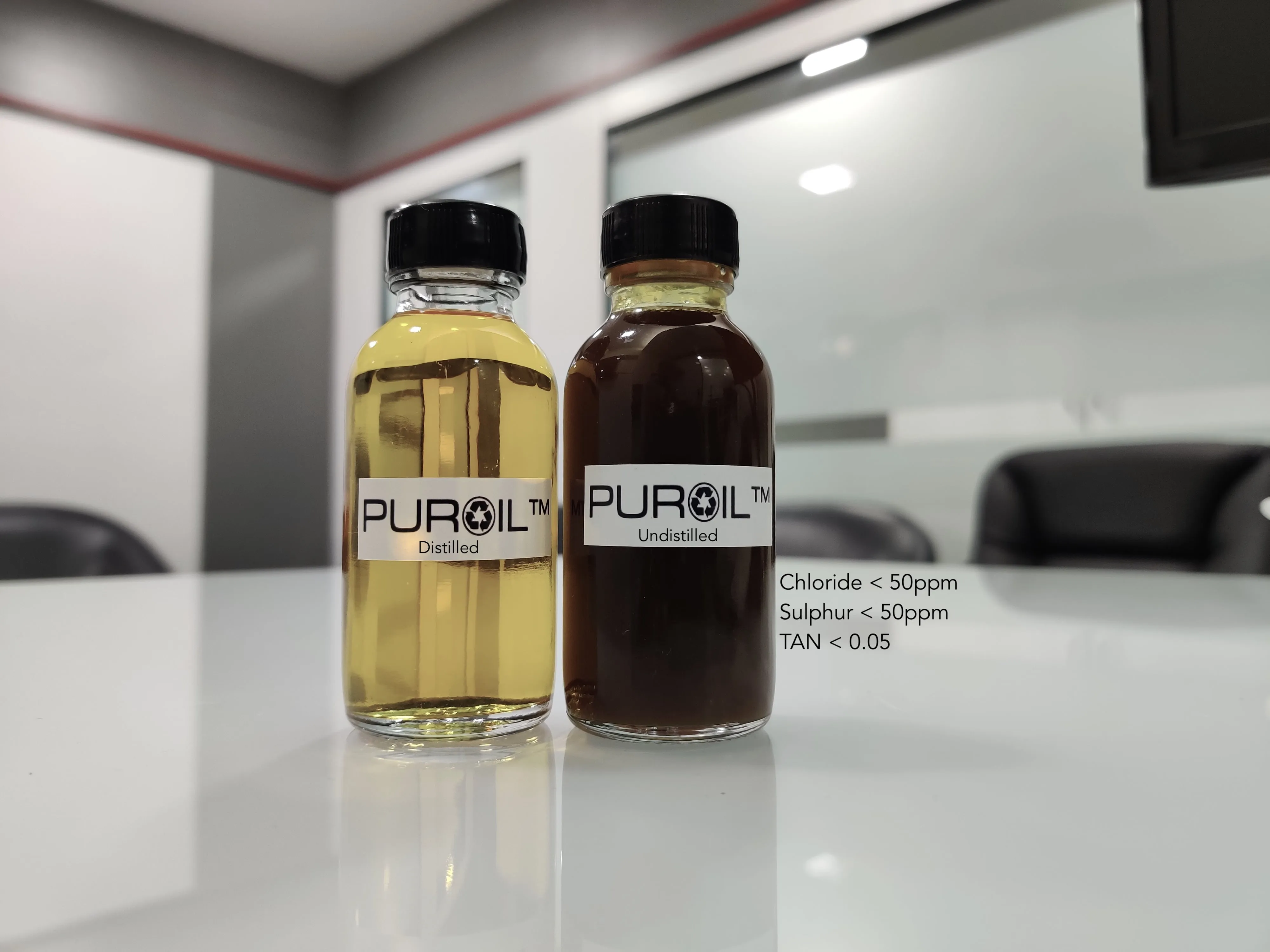
Crude oil (left) vs. distilled fractions (right)
Price Premium: $400/MT → $600-$900/MT
Crude tire pyrolysis oil trades at $400-$550/MT. After distillation, the diesel fraction sells for $600-$900/MT — a 50-70% premium. ISCC-certified oil can fetch $700-$1,100/MT.
APChemi operates its own 15,000 L/day pyrolysis oil distillation plant — processing over 5 million litres annually. Talk to our oil purification specialists.
Purification Economics
$500K–$1.5M Additional Annual Revenue
For a plant processing 10 tonnes/day of crude pyrolysis oil, distillation adds $500,000-$1.5M in annual revenue at modest additional operating cost. This makes distillation one of the highest-ROI investments in the pyrolysis value chain.
APChemi's Oil Purification Facility
Operational Distillation Plant
APChemi doesn't just design oil purification systems — we operate one of the few dedicated pyrolysis oil distillation facilities in the industry:
- • Capacity: 15,000 litres per day (5M+ litres annually)
- • Feedstock: Tire, plastic, and mixed pyrolysis oils
- • Products: Diesel, naphtha, and heavy fuel oil fractions
- • Quality control: In-house lab for fuel specification testing
- • Toll processing: Available for third-party operators
This hands-on experience makes APChemi uniquely qualified to design distillation systems for client projects.

APChemi's operational distillation plant
APChemi's product portfolio: PUROIL, PUREMAX, and PYROMAX technologies
ISCC Plus Certified Oil
APChemi is ISCC Plus certified, enabling production of certified sustainable pyrolysis oil that commands premium market prices:
- • Qualifies for recycled content claims
- • Eligible for SAF (sustainable aviation fuel) blending
- • Meets EU Renewable Energy Directive requirements
- • Accepted by Shell, BASF, and major petrochemical buyers
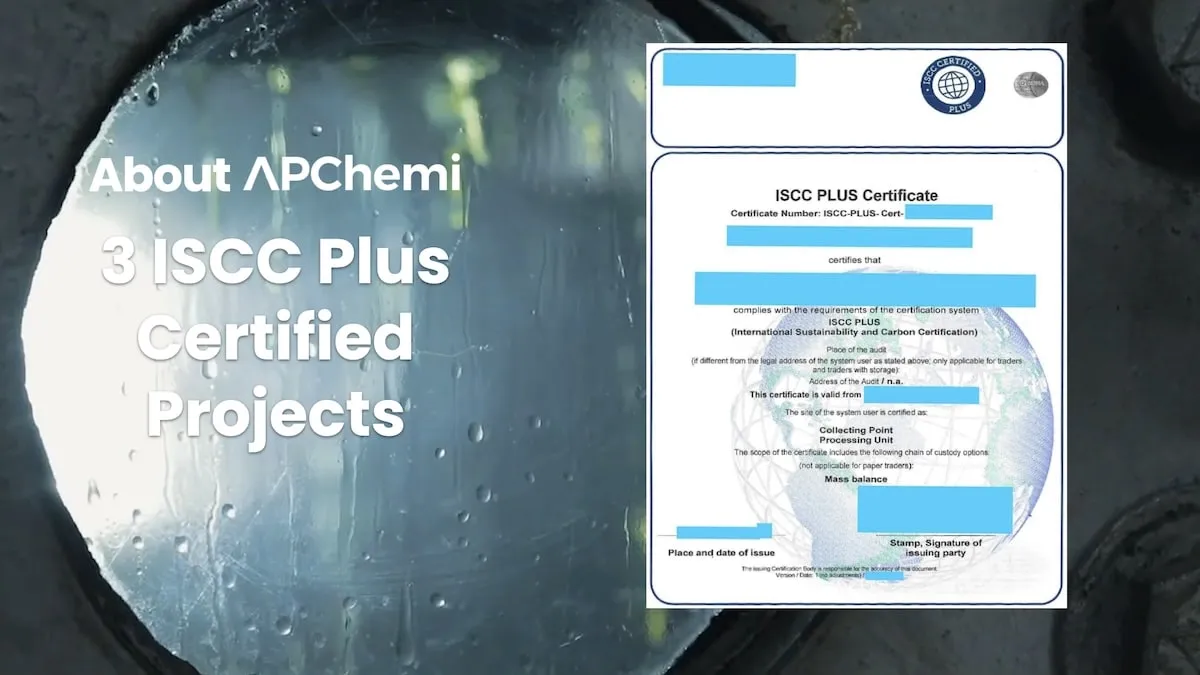
APChemi's ISCC Plus certified pyrolysis oil
APChemi's Oil Purification Expertise
Industry leaders in pyrolysis oil upgrading and distillation
Distillation Plant Design
- ✓ Custom distillation plant engineering
- ✓ Integrated pyrolysis + purification systems
- ✓ PUREMAX technology licensing
- ✓ Commissioning & startup support
Oil Quality R&D
- ✓ Crude oil characterization
- ✓ Distillation yield prediction
- ✓ Desulfurization optimization
- ✓ Product specification testing
Toll Processing
- ✓ Process your crude oil at APChemi's plant
- ✓ No upfront distillation CAPEX needed
- ✓ ISCC-certified processing available
- ✓ Immediate access to premium markets
ISCC Certification
- ✓ Mass balance documentation
- ✓ Supply chain certification
- ✓ Audit preparation & support
- ✓ Market access for certified oil

Distilled pyrolysis oil fractions — clear, defined specifications, premium value

Deep dive into APChemi's pyrolysis oil purification and fractional distillation capabilities — from crude pyrolysis oil to fuel-grade products.
Pyrolysis Oil Suppliers
Find pyrolysis oil producers and suppliers worldwide — from crude tire oil to ISCC certified circular feedstock.
Frequently Asked Questions
Crude pyrolysis oil contains sulfur (0.3-1.5%), particulates, heavy residues, water, and chlorinated compounds that limit its use and market value. Purification removes these contaminants and separates the oil into defined fractions (naphtha, diesel, heavy oil) that command 50-100% higher prices than crude oil.
Crude tire pyrolysis oil trades at $400-$550/MT. After fractional distillation, the diesel fraction sells for $600-$900/MT — a 50-70% premium. ISCC-certified purified oil can fetch $700-$1,100/MT. For plastic pyrolysis oil destined for petrochemical feedstock, purification to naphtha-grade can add even more value.
PUREMAX is APChemi's proprietary pyrolysis oil purification and distillation system. It uses fractional distillation combined with desulfurization and decontamination processes to upgrade crude pyrolysis oil into marketable fuel fractions. APChemi operates a 15,000 litre/day PUREMAX facility, processing tire and plastic pyrolysis oil.
The middle distillate fraction from pyrolysis oil distillation has properties similar to diesel fuel and can be used as a direct replacement in industrial burners, generators, and marine engines. However, it typically doesn't meet road diesel specifications without further hydrotreating. It's widely used as an HFO (heavy fuel oil) replacement.
Yes. ISCC Plus certification can be obtained for pyrolysis oil produced from waste feedstocks (tires, plastics, biomass). Certification requires documented mass balance, sustainable feedstock sourcing, and certified processing. ISCC-certified oil commands premium prices as it qualifies for recycled content claims and SAF (sustainable aviation fuel) blending.
Get a Free Consultation
Tell us about your pyrolysis project and our engineers will get back to you within 24 hours.
Get a Free Project Assessment →Explore More
Tire Pyrolysis Plant
Primary source of crude pyrolysis oil for distillation and purification.
Plastic Pyrolysis Plant
Plastic-derived oil for naphtha-grade chemical feedstock production.
Chemical Recycling
How purified pyrolysis oil feeds circular plastics production.
ISCC Plus Certification
Certify your purified oil for premium sustainable fuel markets.
Pyrolysis Plant Cost Guide
Revenue analysis showing crude vs. purified oil price premiums.
R&D / Lab Testing
Analyze your pyrolysis oil quality and distillation potential.